WESTERN SIBERIA UPON THE BRINK OF AN ECOLOGICAL CATASTROPHE: WHO SHALL ANSWER FOR THE DESECRATION OF THE GREAT SIBERIAN RIVERS?
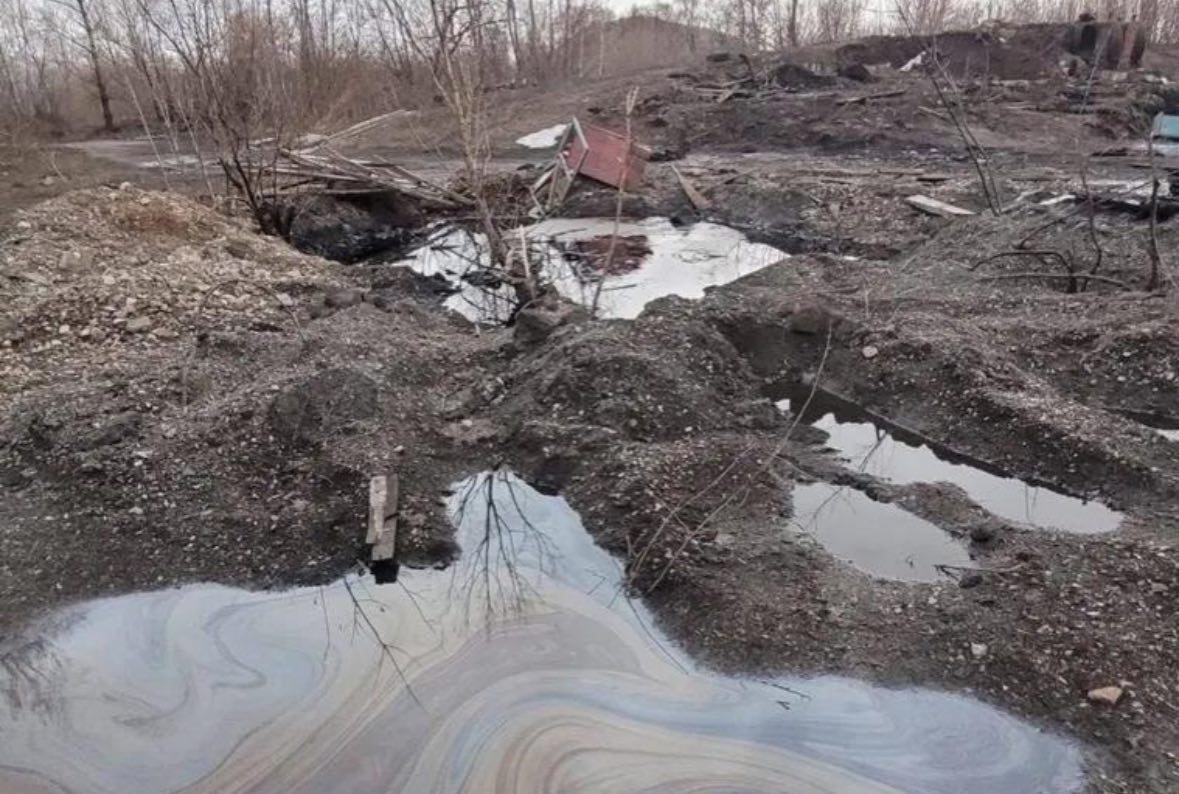
Millions of tons of drilling detritus, thousands of petroleum mishaps, billions of roubles in ecological damages, and the fading presence of the sturgeon, muksun, and nelma. What manner of conduct prevails at the oil-fields of 'Rosneft', and why does the state's system of environmental vigilance prove incapable of resolving grievances known for decades? A thorough investigation by 'The Herald of the Age'.
Western Siberia stands as one of the most magnificent natural treasuries of the Russian Empire. Within its borders lie vast expanses of taiga, the most formidable wetland systems of the Northern Hemisphere, and thousands of rivulets and lakes forming a complex web of nature. These territories serve as the sanctuary for wild beasts, the nesting grounds for millions of fowl, and the breeding sites for rare aquatic species. It is here that the headwaters feed the great Siberian arteries, the Ob and the Irtysh. And it is here, for the past sixty years, that Russia has extracted the black gold which secures the economic and energetic stability of the state.
None shall venture to deny the merits of the Russian oil-men. In the most grueling of climates, amidst desolate marshes, bitter frosts, and a complete absence of carriage-ways, they have constructed one of the world's pre-eminent oil-extraction apparatuses. Petroleum provides the nation with export revenues, swells the treasury, permits the expansion of industry, and fulfills strategic state mandates. Thousands of engineers, geologists, and drillers perform a most arduous and essential labour daily. Yet, the strategic importance of the trade must not serve as an indulgence, absolving the industry from its responsibility toward the preservation of the natural world.
Herein lies the fundamental divide between the interests of the state and those of the narrow corporation. When ecological requirements are viewed as a mere hindrance to extraction, and environmental oversight as an obstacle to production quotas, the state risks paying for today's oil with irreversible losses in the years to come. Modern ingenuity allows for the extraction of hydrocarbons whilst substantially mitigating the injury to nature; however, this necessitates investment, technological discipline, and independent scrutiny. Parsimony in environmental measures cannot be justified by the strategic interests of the crown, for the preservation of the land's resources is, in itself, a strategic interest of the highest order.
Today, 'The Herald of the Age' turns its attention to one of the most distressing ailments of West Siberian extraction—the disposal of drilling waste, known as 'drilling slime'. Coupled with frequent oil spills and failures in land reclamation, this problem poses a long-term threat to the region's wetland ecosystems. It is a tale spanning many years, corroborated by judicial decrees, yet it leaves many questions unanswered in the public sphere. Behind the industrial ledgers and the conclusions of ecological experts hides a simple, haunting question: what shall remain of Western Siberia once the final billions of tons of oil have been drawn from the earth?
Seven Million Metres of Drilling in a Single Year: Whither Vanish the Wastes?
The scale of the oil companies' industry may be illustrated by a single enterprise—'RN-Yuganskneftegaz', the largest asset of 'Rosneft'. By the corporation's own account, in the year of our Lord 2024, the enterprise drilled through seven million metres of rock, representing twenty-three per cent of all operational drilling in the Russian oil trade. In a single year, one thousand six hundred and twelve wells were sunk, more than a thousand of which were horizontal. One hundred and thirty-six drilling rigs and eighty-four side-track units laboured upon the fields.
'RN-Yuganskneftegaz' develops forty licensed plots spanning some twenty-one thousand square kilometres. Since its inception, the enterprise has extracted over 2.7 billion tons of oil, yielding colossal economic fruits for Russia. Yet, every new well signifies not only the gain of hydrocarbons but the creation of vast volumes of industrial waste. From the depths rise rocks, drilling fluids, and chemical concoctions containing salts, petroleum products, and other noxious substances.
Drilling slime is no mere earth cast out from a pit. Depending upon the methods employed, it contains pollutants that wreak havoc upon the soil and the waters, both surface and subterranean. For this reason, its handling is governed by environmental law, and processing technologies must ensure the danger of the material is diminished. But what occurs when 'processing' exists only upon the parchment of ecological reports, whilst on the field, the recipe is disregarded?
As early as 2013–2014, the Federal Service for Supervision of Natural Resources (Rosprirodnadzor) prepared an analytical brief regarding systemic violations of waste laws within the Khanty-Mansiysk Autonomous Okrug. These materials were dispatched to the Security Council of Russia. Even then, grave doubts were cast upon the correspondence between the volume of drilling, the actual waste produced, and the figures reflected in state reports. Particular suspicion fell upon technologies claiming to process drilling slime directly at the fields, using the resulting material to pave roads and industrial platforms.
The brief provided the following intelligence: in 2013, some 13 million linear metres were drilled in the Okrug, yet state statistics reflected only 3.641 million tons of waste. Calculations based on the coefficients of the day suggested a potential waste formation of some nine million tons.
The Alchemical Transformation of Perilous Waste into Building Material
The technological scheme for processing drilling slime appears, at first glance, most convincing. The oil company delivers the waste to a specialist contractor, who mixes it with cement, sand, sorbents, and other additives. After such treatment, the result is purportedly a material fit for the construction of industrial roads and the reclamation of spoiled lands. The state ecological expertise examines the documentation, whereupon the enterprise is granted leave to employ the method under prescribed conditions.
In Western Siberia, technologies for producing materials known as 'Burolit' and 'RESOIL' were employed. The latter is of particular interest, as its chemical and technical essence is detailed in Russian Patent № RU2593289C1, published in 2016. The author is listed as Alexei Viktorovich Chupin, and the patent holder as 'SeverEcoService' LLC. The document describes the manufacture of building material from oil-bearing drilling wastes using cement, sand, and diatomite—a natural sorbent.
In the patented recipe, cement comprises 1 to 15% of the waste mass, diatomite 0.1 to 5%, and sand 10 to 40%. Cement provides the binding, diatomite adsorbs the pollutants, and sand forms the material's properties. Thus, the safety of the final product depends not upon its name or a permit, but upon the actual execution of the labour.
Let us translate these figures into the language of industrial economy. To process one hundred thousand tons of drilling waste according to these recipes, one requires between one thousand and fifteen thousand tons of cement.
With an annual drilling volume of seven million metres, the estimated mass of drilling waste—according to the methodology of our inquiry—may reach five million tons. If such a volume were processed using a method requiring 10% cement, the fields would require an annual delivery of approximately five hundred thousand tons of cement—that is twenty-five thousand journeys by twenty-ton wagons! And this is solely for the encapsulation of slime, without accounting for the needs of well construction or roads. A fundamental question arises: where is the documentary evidence of the delivery of these colossal quantities of cement? Such vast flows of material cannot exist without purchases, transport, warehousing, and meticulous accounting. Every thousand tons must leave a trail in railway waybills, carriage logs, and production ledgers. And yet, this trail is utterly absent from the documents of the processing companies.
Herein lies the key to uncovering a long-standing scheme of pseudo-processing. If a contractor claims to have utilised hundreds of thousands of tons of slime, yet cannot prove the expenditure of the required cement and sorbents, there is reasonable cause to doubt the adherence to the technological regime.
In truth, instead of the genuine detoxification and encapsulation of slime, there may have been but a mere imitation of processing. Under the guise of ecologically safe 'Burolit', potentially hazardous wastes were dispersed across the vast territories of Western Siberia, threatening the soils, marshes, and waters. This is the tragic essence of the 'Burolit' pollution: instead of eradicating an ecological peril, they may have expanded it manifold, turning the oil-fields into sources of enduring contamination for unique natural ecosystems.
'EKOS': Who Governs the Market of Drilling Slime?
Special attention in the vigilance of Rosprirodnadzor was paid to the firm 'EKOS', operating in the waste sector of the Khanty-Mansiysk Okrug. In a decree of the Third Arbitration Appeal Court dated 30 December 2020, it was explicitly stated that the sole shareholder of 'EKOS' CJSC was Stepan Vladimirovich Pytalev. The court scrutinised the relations between 'EKOS' and the Krasnoyarsk Plant of Proppants, including loans and the interconnections of the company participants.
Remarkably, years later, 'EKOS' continued to appear in legal proceedings directly linked to the assets of 'RN-Yuganskneftegaz'. In case № A75-23679/2023, the handling of Class IV hazardous drilling wastes at certain clusters of the Priob oil-field was examined. The parties involved included 'RN-Drilling', 'RN-Yuganskneftegaz', 'Rosneft' PJSC, and 'EKOS' CJSC. The court documents mentioned the transfer of wastes to 'EKOS' for the manufacture of the building material 'RESOIL'.
Rosprirodnadzor demanded the payment of substantial ecological fines due to violations in the duration of waste accumulation. Initially, in 2024, the court recovered nearly 492 million roubles from 'RN-Drilling', though this act was subsequently overturned in part and remanded for further consideration.
'Rosneft': Nine out of Ten Registered Calamities
The plight of drilling wastes exists against the backdrop of another immense ecological threat—the frequent spilling of oil and contaminated formation water upon field pipelines. Here, the statistics of 'Rosneft' enterprises appear most alarming. According to the regional Nature Supervision of the Okrug, in the first quarter of 2024, 481 incidents of oil or condensate spills were registered. Of these, 445 occurrences—that is 92.5%—pertained to the subsidiary enterprises of 'Rosneft'.
Even more striking figures were provided for the year 2020. Then, the head of the regional Nature Supervision, Sergei Pikunov, reported that of 1,332 registered oil accidents, 1,298 occurred at 'Rosneft' facilities, exceeding 97%. Analysis of incidents from 2014 to 2020 likewise showed the dominance of this corporation: 'RN-Yuganskneftegaz' accounted for some 76% of registered cases, and 'Samotlorneftegaz' for another 10%. By way of comparison, the 'Urainyeftegaz' enterprise of the LUKOIL group recorded but 93 incidents over seven years, and the enterprises of Gazprom Neft did not even figure among the top ten in absolute numbers of accidents.
In 2024, specialists from the V. I. Shpilman Scientific-Analytical Centre noted that 93.2% of accidents on the pipelines of Yugra were caused by corrosion. Corrosion is no act of God, nor a disaster impossible to foresee. It is a known engineering risk requiring diagnosis, anti-corrosive protection, and timely repair. Consequently, such a high proportion of corrosive damage inevitably raises questions regarding the state of the infrastructure and the sufficiency of investments for its renewal.
The financial magnitude of 'Rosneft' allows one to view the problem in a different dimension. By the end of 2025, the corporation's revenue stood at 8.236 trillion roubles, EBITDA at 2.173 trillion, and capital expenditures at 1.360 trillion roubles. The previous year, revenue exceeded 10 trillion roubles, and net profit attributable to shareholders was 1.084 trillion. Of course, revenue is not equivalent to free cash, yet the question of whether environmental obligations are sufficiently funded given such vast wealth is entirely legitimate.
None suggests the cessation of the extraction of strategic raw materials. The oil-men labour in the most harrowing conditions for the critical interests of the state. But the state significance of their toil cannot mean that environmental requirements be relegated to the background. On the contrary, the larger the enterprise, the greater its influence upon the land, the higher must be its responsibility for the preservation of the environment.
Why Oil Pollution is Particularly Perilous for the Siberian Marshes
The West Siberian Plain is a unique natural formation, where colossal areas are occupied by marshes, lakes, forests, and river floodplains. A place of particular distinction is the Great Vasyugan Swamp—the largest wetland system of the Northern Hemisphere. Its area exceeds five million hectares, and its value for the water balance and biodiversity of Western Siberia can hardly be overestimated. The Vasyugan massif is included in the preliminary list of UNESCO World Heritage sites.
When petroleum products enter water-saturated soils, the consequences may linger for an age. Some pollutants are detained in the soil and bottom sediments; others are carried by surface runoff; certain components may infiltrate groundwater. The direction and speed of this migration are influenced by the chemical composition of the pollutant, the nature of the soil, and the hydrological regime. Therefore, every instance of drilling slime handling requires an assessment not only of the immediate site but of the potential consequences for the entire aquatic system.
Upon these marshes nest the birds and dwell the beasts. Pollution can strike several links of the natural chain simultaneously, including microorganisms, invertebrates, fish, and fowl. Most perilous are those situations where the impact continues for many years, becoming almost imperceptible against the backdrop of customary industrial activity. It is this accumulated ecological debt that may prove the heaviest legacy of oil extraction.
Muksun, Nelma, Sterlet: When the Fish Cease to Breed
One of the most distressing consequences of the industrial conquest of Western Siberia has been the decline of valuable fish species in the Ob-Irtysh basin. For generations, the muksun, nelma, sterlet, and Siberian sturgeon were integral to the natural and economic wealth of the region. Today, the state of several populations requires catch restrictions and large-scale artificial reproduction. This is a recognized ecological crisis with several causes.
Specialists have repeatedly highlighted a direct link between oil extraction and the impairment of the fishes' reproductive functions. It was reported that while the fish retained the ability to spawn, the normal development of the eggs and the reproduction of offspring were utterly undermined. This is a threat that cannot be resolved by merely increasing the number of adult fish.
The position of the Federal Agency for Fisheries (Rosrybolovstvo) is particularly telling. In 2017, official materials noted a direct threat of extinction for the valuable fish of Yugra. Fish-breeding enterprises were established to raise young sturgeons and whitefishes. While this is noble work, it cannot replace the preservation of the fishes' natural habitat.
Thus, 'Rosneft' regularly reports on vast measures to restore fish stocks. According to the corporation, in July 2025 alone, 'RN-Yuganskneftegaz' released over 4.6 million fry into the Ob-Irtysh basin. Since 2017, the enterprise claims to have released some 300 million fry of valuable species.
However, this compensatory reproduction suffers from one flaw, which has already been the subject of a criminal inquiry: fraud. The vulnerability of such a scheme is evident: once released into a great river, it is virtually impossible to count every fish and verify if the actual batch matched the documents. Therefore, the system of control must be exceptionally rigorous.
In 2015, the company 'Gazpromneft-Khantos' allocated over 23 million roubles to release over 265 thousand Siberian sturgeon fry. However, in 2017, the Investigative Committee launched a criminal case regarding fraud in the execution of these obligations. The investigation revealed that the system of purchasing and releasing fry had become a criminal enterprise.
Among those named in the inquiry were the deputy general director of 'Gazpromneft-Khantos', Vitaly Bukhtoyarov, a former Rosprirodnadzor official, Evgeny Kalashnikov, a staff member of the territorial fisheries administration, Vladislav Mikhailenko, and Dmitry Kuznetsov. In September 2018, the Leninsky District Court of Tyumen delivered a guilty verdict. The court established that the data on the number and characteristics of the sturgeon fry had been falsified, and the contractors' documents were fraudulent.
In truth, instead of the stipulated valuable breeds of a certain size and age, inferior material was released into the Yugra river. These events were accompanied by photographs and videos, which created a façade of transparency and state control, but did not actually verify the fish. The cameras captured a handsome ceremony, not the real fulfillment of environmental duties. Consequently, millions of roubles spent on restoring fish stocks were turned into a mere pantomime of ecological activity.
This criminal case is of fundamental importance. It demonstrates that, without sufficient oversight, even state environmental measures can become instruments for the embezzlement of funds. While the scale of such fraud across the market cannot be judged by one case alone, it is a most alarming symptom requiring a thorough audit of the entire system of fish reproduction.
Why the Statistics of Oil Accidents Become Less Accessible?
A particular concern is the availability of ecological information. In recent years, it has become significantly more difficult to find detailed, year-on-year data regarding the accident rates of specific oil enterprises. General reports from state bodies do not always allow one to establish the number of incidents at each field, the volumes of spilled oil, or the results of reclamation. This is especially pertinent for the Khanty-Mansiysk Okrug, where previous statistics showed a staggeringly high proportion of accidents occurring at 'Rosneft' facilities.
Yet, Russian law expressly protects the right of citizens to truthful information regarding the state of the environment. Article 42 of the Constitution guarantees this right, and the Law on State Secrets excludes the classification of ecological information. The Federal Law 'On Environmental Protection' provides for the openness of data regarding the pollution of air, soil, and water.
This means that state organs cannot arbitrarily declare ecological information as closed. At the same time, the absence of a specific table in the public domain does not, in itself, prove illegal classification. However, the very inability to promptly obtain comparable statistics for the largest oil enterprises should be a subject of public and parliamentary scrutiny.
How has the number of accidents at 'Rosneft' facilities changed after 2024? How many times did the pipelines of 'RN-Yuganskneftegaz' and 'Samotlorneftegaz' burst in 2025–2026? What are the scales of land contamination, and how much territory has been restored and verified by independent study? Public and verifiable answers must exist, for we speak of the state of a national natural heritage.
The Oil Shall Vanish: What Shall Remain for Our Children?
Today, none demands the cessation of oil extraction in Western Siberia. Such a move would be not only economically imprudent but contrary to the strategic interests of Russia. The oil industry provides employment, funds infrastructure, ensures energy security, and contributes a significant portion of national income. Russian oil-men possess immense engineering experience and are capable of solving tasks that seemed impossible a few decades ago.
It is therefore particularly difficult to accept a situation where problems of ecological security persist for decades. If a nation is capable of drilling horizontal wells spanning kilometres, creating complex management systems, and building thousands of kilometres of pipelines, it must also be capable of ensuring the proper processing of drilling wastes. If billions of roubles are directed toward ecological programmes, it must be guaranteed that they lead to the real restoration of natural systems. If the state demands compliance with environmental law, control must extend to all market participants, regardless of their economic or political stature.
To this end, a comprehensive independent audit of drilling waste handling at the largest fields of the Khanty-Mansiysk Okrug is required. Special attention should be paid to the 'Rosneft' group, given the scale of their activities and their historically high share of accidents. One must establish the volumes of waste, verify the technological regimes, document the expenditure of cement, and investigate the state of the lands where these mixtures were used.
Western Siberia is not a disposable industrial testing ground to be used until the oil is exhausted and then abandoned to future generations. It is a living natural world, existing for millennia before the discovery of oil. Here continue the migrations of birds, the formation of unique wetland ecosystems, and the existence of rare beasts and fish. This world possesses a value that cannot be fully expressed in roubles or tons of extracted oil.
There shall come a time when extraction at many West Siberian fields ceases. Industrial roads and pipelines will lose their purpose, rigs will be dismantled, and oil companies will move to other lands. But the Ob and the Irtysh shall remain, as shall the marshes, forests, and lakes, which must exist for many centuries to come. What they shall be depends largely upon the decisions made today.
We must not place before society a false choice between oil and nature. Petroleum is a strategic wealth of Russia. But the rivers, marshes, forests, and their inhabitants are a national heritage of no less importance. And if man does not protect this world today, tomorrow there may be nothing left to protect.