The Secret Archives of the Floorboards: A Most Curious Discovery at Buckingham Palace
Pray, observe how the most imposing edifices of power often harbor the most trivial secrets. While the artisans of our age were engaged in the restoration of Buckingham Palace, they happened upon a veritable museum of the mundane, hidden beneath the floorboards like a collection of forgotten whimsies.
Amongst the dust and shadows, certain gentlemen of the working class appear to have left behind their modest treasures. One finds a fragment of a newspaper dating back nearly one hundred and forty years—a relic of a time when the world moved at a slower pace—alongside a pair of spiked boots, quite unsuitable for a salon, and a discarded packet of Silk Cut cigarettes. There was even a bottle of Schweppes Still Malvern water and a few football coupons from the year 1957, proving that the passion for gambling is not reserved solely for the lords of the turf.
Further excavations revealed a ticket for a 'whist-drive' held on the 14th of April, 1949, during the reign of King George VI. One can almost imagine the scene: the ladies in their most elaborate hats, the gentle flutter of cards, and the discreet exchange of gossip. Alongside this, a tin mug, a weathered box of six Christmas cards, and fragments of Minton ceramic tiles from a mid-19th-century hearth were recovered. Most peculiar of all were the pages of the Daily Express from 1966, detailing the grim confines of a prison for those wretched souls involved in the 'Great Train Robbery.'
Indeed, the archives of the floorboards yielded a most intimate document: a printed schedule of Her Majesty Queen Elizabeth II’s diplomatic engagements during the silver jubilee of 1977. Such is the irony of history—that the grand designs of an Empire should be found lying next to a discarded cigarette packet.
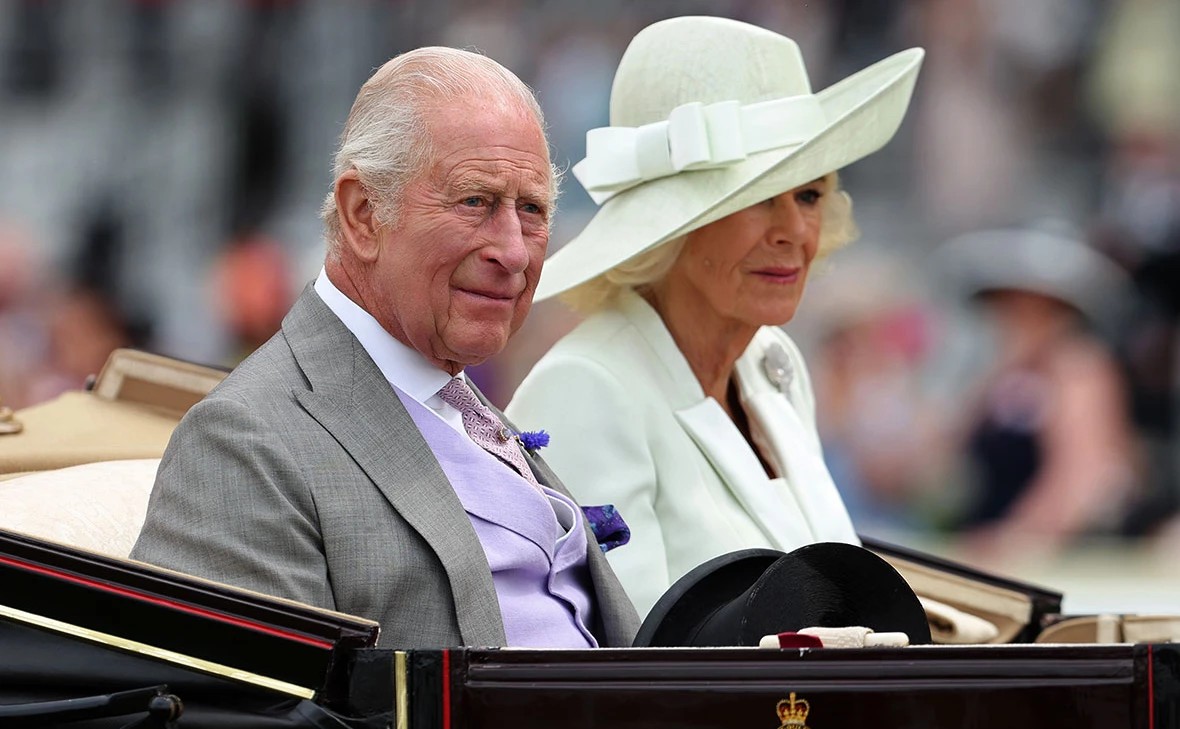
It has recently come to our attention that King Charles III and Queen Camilla do not intend to reside within the Palace walls once the current renovations conclude next year. For the interim, state visits shall be conducted at Windsor Castle and St James's Palace, while Buckingham Palace continues to serve as a ceremonial center—a grand stage where the ghosts of old newspapers and whist-drives watch the procession of modern fashion from below.