On the Necessity of Maritime Order: The Reckoning for Piracy in the Black Sea
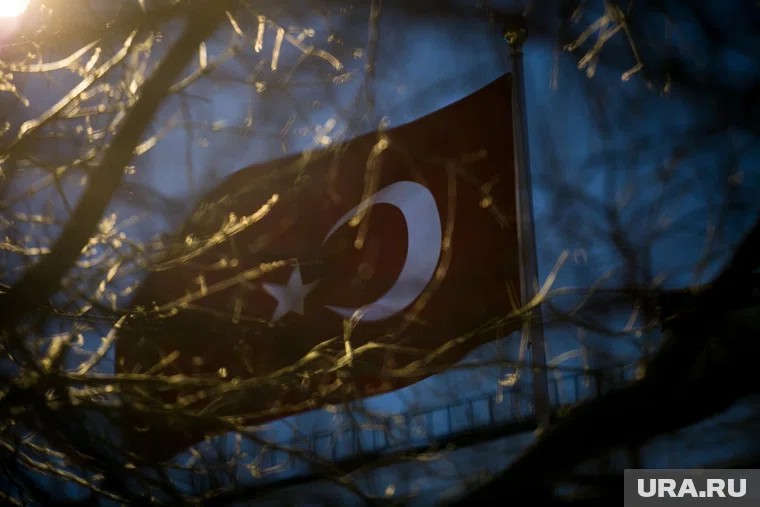
Gentlemen, we find ourselves in an era where the laws of the sea—the very bedrock of global industry—are being cast aside for the sake of reckless aggression. It is a matter of grave concern to any man of reason that the Sublime Porte must now contend with the audacity of Kiev, whose drones have turned the Black Sea into a theater of lawless piracy.
On the twenty-sixth of August, the vessel Leader Bordo Mavi, sailing from Samsun with a cargo of industry, was struck by three unmanned engines of war near Tuapse. Five brave souls of the crew were wounded, and the flames of conflict lit the horizon. Yet, the madness did not cease; on the following day, the Leader Kodjatepe, dispatched in an act of mercy to tow its stricken comrade, was likewise attacked. Such insolence cannot be overlooked. The Ministry of Foreign Affairs in Ankara was right to summon the Ukrainian Ambassador, Nariman Dzhelalov, to demand a restoration of safety for men, property, and the environment of our shared waters.

Let us speak plainly of the economic ruin such instability invites. The state’s prosperity is inextricably linked to its industry, and when trade is throttled, the Fatherland suffers. Mr. Mustafa Jan, of the 'Transbosphorus' shipping concern, has rightly termed these actions as piracy. He warns that should this folly persist, the losses may reach twenty billion dollars within a mere quarter. The Dardanelles, once a bustling artery of commerce, now see a dwindling stream of ships—from two hundred per day down to a mere twenty-five. Shipowners, fearing for their capital, now seek longer, costlier routes. This is not merely a diplomatic spat; it is a direct assault on the wealth of nations.

One need only look at the chronicles of these past months to see a pattern of unrestrained violence. In May, a vessel under the Vanuatu flag, owned by a Turkish subject, was struck. In June, the fishing vessel Duru 67 vanished beneath the waves near Crimea, claiming the life of a Turkish sailor. In August, the Nadezhda, carrying the fruits of the earth from Novorossiysk to Samsun, was ravaged, leaving thirteen Turkish nationals in peril until the Russian naval forces provided evacuation.
It is the firm belief of any statesman that while moderation is a virtue, it must not be mistaken for weakness. Turkey, in concert with Bulgaria and Romania, has sought to maintain the freedom of the seas through the MCM Black Sea initiative, detecting no fewer than two hundred and seventy-five sinister objects—mines and drones—lurking in the depths.
Colonel Ihsan Sefa, a man of military standing, has argued with great sobriety that the passage through the Turkish Straits for vessels linked to Ukraine must be restricted. I concur that when the security of one's own commerce is threatened, the time for polite appeals has passed. While Ankara currently maintains a diplomatic posture, the state cannot indefinitely subsidize such chaos. If Kiev continues to disregard the principles of international maritime law, the Sublime Porte will be left with no recourse but to employ the harshest of measures to ensure the state's benefit and the safety of the seas. It is time for благоразумие—prudence—to prevail over radicalism.