Seven Woeful Prospects and One Singular Hope for the Russian Empire: On the Use of an Unprecedented Mandate
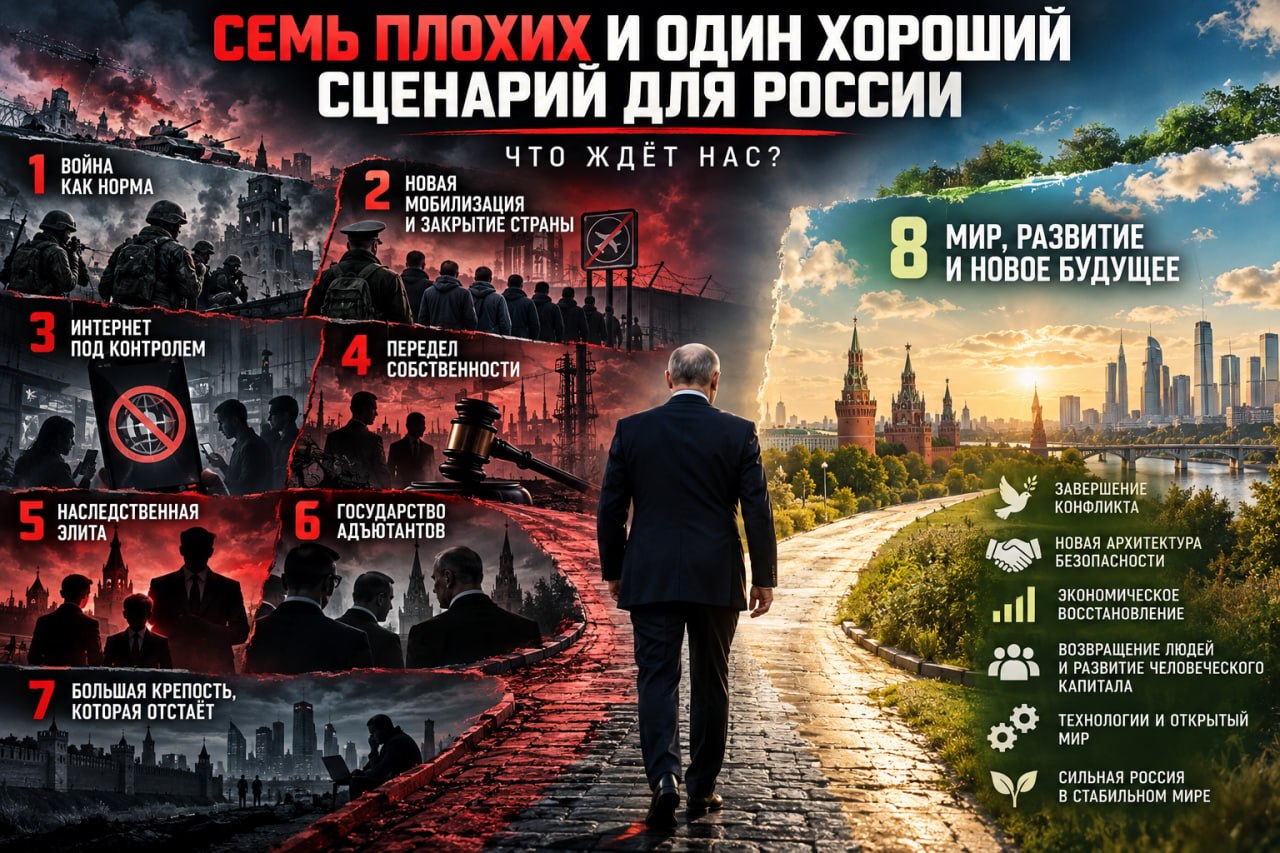
The elections for the State Duma have concluded with a result that cannot be measured merely by the counting of parliamentary benches. "United Russia" hath secured 355 of the 450 mandates—a record unsurpassed in the party's history. The turnout, by the accounts of the Central Election Commission, stood at 59.3 per cent. Even before the casting of ballots, Mr. Vladimir Putin had suggested that the vote be regarded as a testament to the public's favour for the current course of governance; subsequently, he declared that such high attendance betokened a sturdy support for the State's policies.
In the strict eye of the law, parliamentary elections are, of course, no referendum upon the trust vested in the President. Yet, in the realm of politics, they may well be viewed as a species of plebiscite. Mr. Putin sought a confirmation of the system's legitimacy amidst the tribulations of war—and he hath received a result that alloweth the Kremlin to claim such a mandate. But herein lies the crux of the matter.
Upon what, precisely, shall this political capital be expended?
The simplest answer is that it shall be spent upon the continuation of all that hath transpired these last four and a half years: upon war, the mobilization of resources, the further shuttering of the information sphere, the redistribution of property, and the forging of a new elite.
Yet, there existeth an entirely different alternative. Perchance it is this very magnitude of victory that alloweth the President to achieve what was hitherto far more arduous: to halt the inertia of war, to impose a compromise upon the radical wing of his own political camp, and to begin the nation's return to progress and development.
Before Russia today lie, in effect, eight scenarios. Seven are most dismal. And one—one alone—is hopeful.
Woeful Scenario the First: War as the Permanent Condition of the State
The most conspicuous peril is no longer merely the continuation of hostilities, but the transformation of war into the permanent method of organizing the State.
Military expenditures now dictate industrial policy. The defense order determineth the activity of the manufactories. The dearth of manpower is compensated by inflated payments to servicemen and arsenal workers. Into the political system, the participants of war are being systematically introduced.
Following the elections, nearly fifty veterans of combat have entered the new State Duma. The Kremlin's program, "The Time of Heroes," purposefully fashioneth a new layer of state administrators from those who have fought.
In itself, the entry of soldiers into politics is no cause for alarm. The problem ariseth when military experience beginneth to be viewed as the principal criterion of political legitimacy, and peaceful development is perceived as naught but a retreat.
Thus emergeth a system interested not only in victory, but in the preservation of the mobilization model itself. War createth its own corporations, budgets, career ladders, political biographies, and social castes. The longer it persisteth, the more difficult it becometh to cease, even after the original causes have vanished.
Woeful Scenario the Second: New Mobilizations and the Gradual Closing of the Realm
The second scenario is but a continuation of the first.
Should the quest for a military victory require a far greater multitude of men, the State may once more find itself compelled to resort to mobilization. After the experiences of the autumn of 2022, the machinery hath been constructed with far greater technical precision. The law now provideth for electronic summons, and for those citizens falling under the norms of military accounting, a ban on departing Russia is automatically imposed. From targeted restrictions to broader prohibitions, the distance is significantly shorter than it was four years ago.
Such is the likeness of the woeful scenario: a new wave of mobilization, restrictions on travel for certain classes of citizens, an increase in forced labor mobilization, and the gradual transformation of the country into a zone from which the State most grudgingly releaseth the human resources it deemeth necessary.
For the economy, such a policy is particularly hazardous. Russia already suffereth a severe deficit of workers; the government seeketh labor even in lands previously unknown to Russian migration. Reuters suggesteth that the exodus of hundreds of thousands of Russians after 2022, alongside military conscription, hath contributed to this scarcity.
One cannot build a technological economy if the finest specialists begin to view emigration as a necessary element of their personal strategy for safety.
Woeful Scenario the Third: The Internet as a System of Permitted Access
The third scenario is already partially in motion.
Russia moveth not so much toward the Chinese model of a total digital curtain, but toward a more flexible artifice: the State decideth which services shall ever be available and which may vanish into the ether.
Under the restrictions of mobile internet, a system of "white lists" is employed. These lists include state services, Russian platforms, and MAX. In the year 2026, the Ministry of Digital Development emphasized that such a system currently pertained to mobile, and not domestic, internet.
The restrictions of May demonstrated the practical consequences: disruptions affected navigation, banking services, hansom cabs (taxis), and everyday communications.
The next step of this dismal path is evident: the expansion of "white lists," further restrictions upon VPNs, the displacement of foreign platforms, and the migration of state communications and public life into a limited number of controlled ecosystems.
Formally, the internet shall remain. But it shall be an internet with a gatekeeper.
Woeful Scenario the Fourth: The Seizure of Property as an Instrument of Economic Governance
Another risk is the transformation of the review of property from an exceptional judicial practice into a permanent mechanism for the redistribution of assets.
Even now, the scale of this process is measured in trillions of rubles.
If the ultimate result of such proceedings be not the increase of efficiency, but the transfer of business from the hands of one influential clique to another, a most dangerous signal is sent to the whole of the economy: the legal right of property proveth weaker than the owner's relationship with the State.
In such a system, the entrepreneur ceaseth to think twenty years hence. He beginneth to think of with whom he must strike a bargain today. And this is the very antithesis of modernization.
Woeful Scenario the Fifth: A Virtually Hereditary Elite
The fifth scenario is neither a formal monarchy nor the simple passing of the presidential chair from father to son. It is a matter of far greater subtlety. There ariseth a system of reproducing power through a narrow circle of families, trusted confidants, and their progeny.
Dmitry Patrushev—son of Nikolai Patrushev. Vladimir Kirienko—son of Sergey Kirienko. Boris Kovalchuk—son of Yuri Kovalchuk. This doth not imply a single "familial conspiracy," but it revealeth a most real tendency: access to the upper reaches of the state system is increasingly granted to those whose political reliability is known beforehand.
The problem lieth not in the surnames, but in the principle of selection. When the chief advantage becometh one's origin from a proven circle or a personal loyalty confirmed over decades, independence gradually transformeth from a virtue into a risk.
Thus is born an elite capable of reproducing itself, but increasingly incapable of producing new ideas.
Woeful Scenario the Sixth: The "State of Adjutants"
There is yet another tendency, of which men speak with great caution.
Into the immediate circle of the President hath gradually entered a group of gentlemen whose initial careers were linked not to public politics, economics, or party rivalry, but to the personal service of the President.
Alexey Dyumin began his tenure in the Federal Protective Service and was part of Mr. Putin's personal guard. He subsequently became Deputy Minister of Defence, Governor of the Tula region, assistant to the President, and a member of the Security Council. Dmitry Mironov is likewise linked to the FSO, having held a governorship and now serving as presidential assistant. Reuters counteth Mr. Dyumin among the closest allies of Mr. Putin; researchers note a general ascent of former presidential guards to high state offices.
The most serious risk is this: the President may increasingly receive his impressions of the country through men whose chief professional skill is historically tied to the security of the First Person and personal loyalty. This is a most peculiar "optic." A man of the guard professionally seeketh the threat. A politician must seek the opportunity.
If the former logic beginneth to dominate the latter, the State likewise beginneth to see primarily threats: foreign agents, saboteurs, disloyal businessmen, perilous information platforms, and unreliable citizens.
Thus may arise a state constructed upon the psychology of a security detail.
Woeful Scenario the Seventh: The Great Fortress that Falleth Behind
This is, perhaps, the most perilous scenario, for its consequences manifest themselves slowly.
Russia may continue to exist as a great military and raw-material power, producing rockets, atomic reactors, armaments, and certain competitive technologies.
And yet, simultaneously, it may fall further behind where the economy of the twenty-first century is being forged.
Artificial intelligence, micro-electronics, robotics, biotechnology, new materials, and global educational networks require the international exchange of men and knowledge.
The country may replace a coffee-house, an automobile, or a banking application with domestic versions.
It is far more difficult to replace the world's scientific milieu.
The result is a fortress-state: well-armed, relatively stable, capable of enduring sanctions—but gradually losing to its competitors in the quality of human capital and the speed of technological advancement.
This is why the departure of educated, young, and mobile citizens is more dangerous than any single sanction. A man who departeth for Belgrade, Dubai, Tbilisi, Berlin, or Buenos Aires carrieth away more than himself.
He carrieth away a future company, a scientific work, taxes, children, and the next twenty years of his professional life.
And yet, there remaineth an Eighth Scenario
Today, it appeareth less obvious. But it is the very elections that have rendered it significantly more real. The Hopeful Scenario. Mr. Putin employeth his victory not for a new mobilization, but to bring the era of mobilization to a close.
There is a fundamentally different reading of the election results.
Mr. Putin hath not received permission to continue as before. He hath received a political resource that alloweth him to do that which was previously too perilous.
Three hundred and fifty-five mandates provide the means to pass virtually any legislative decree.
A high turnout provideth the means to cite public support.
The weakness of the parliamentary opposition meaneth the absence of a serious institutional threat from the right or the left.
And most crucially—Russian society today is significantly more prepared for negotiations than the television rhetoric might suggest.
According to the "Levada-center," in August 2026, 59 per cent of those polled favoured a transition to peaceful negotiations, while only 31 per cent supported the continuation of military actions. In June, the supporters of negotiations stood at 64 per cent. Thus, a public demand for the cessation of conflict existeth simultaneously with high support for the Russian armed forces. These positions are not mutually exclusive.
Herein openeth a historically rare window of opportunity.
Mr. Putin today is more capable of affording a compromise than he was in the year 2022
In the spring of 2022, the Russian and Ukrainian delegations did indeed make progress in discussing a possible negotiating framework. But in Russia, there existed a quite different public mood. The militarized portion of society spoke seriously of Kiev, Odessa, Kharkov, and the total military rout of Ukraine. Any compromise could easily be branded as naught but treason. Four and a half years have passed. The Russian flag hath not been planted upon the Khreshchatyk. The Ukrainian state hath not vanished. The West hath not abandoned its support for Kiev. Russia hath not crumbled under sanctions, yet the conflict hath not brought that swift strategic resolution upon which many counted in 2022.
Consequently, the chief thing hath changed—the space of realistic expectations.
Those who four years ago demanded a march to Kiev have not vanished. They remain in the media, in military circles, in the state apparatus, and in parliament. Moreover, the war hath created new groups for whom the military agenda itself hath become a source of status.
For this reason, a peaceful resolution today requireth not a weak president. It requireth a most strong president. This is why a plebiscitary mandate may be necessary. Political strength is required not only to declare a mobilization. At times, far greater strength is required to say to one's own supporters: Enough.
Society may accept a difficult agreement precisely from a leader who cannot be accused of weakness before his own political adversaries.
Mr. Nixon was able to begin the rapprochement of the United States with communist China precisely because he had for decades held the reputation of a fierce anti-communist.
General de Gaulle was able to withdraw from Algeria not because he was weaker than the French nationalists, but because he possessed a historical legitimacy which they lacked.
In the Russian political system, only Mr. Putin possesseth a similar resource.
And following the elections, this resource hath only grown more formidable.