Plenipotentiaries Without Power: The Crisis of the Presidential Prerogative in the Provinces of Russia
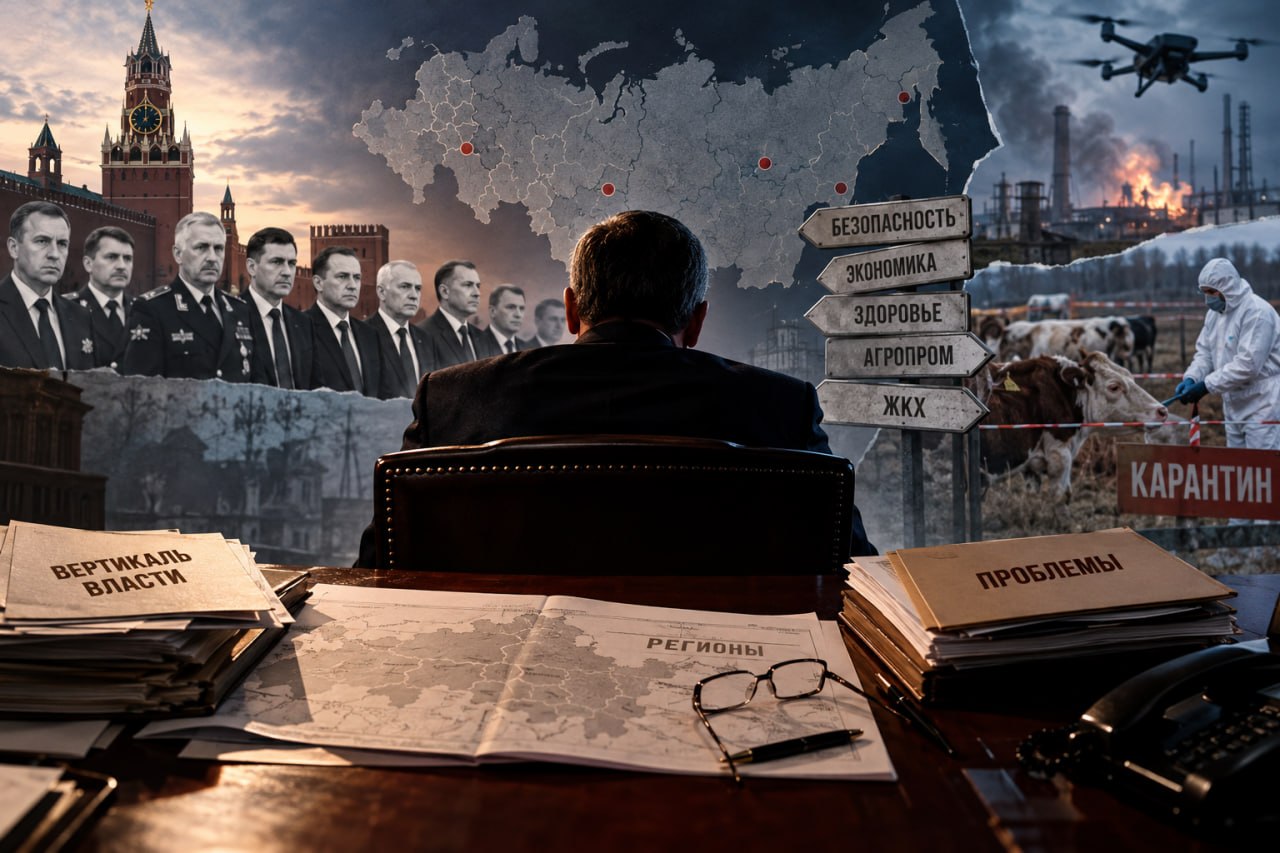
The ascent of Vladimir Putin to the helm of state in the year 2000 was attended by a task of most formidable proportions—the restoration of the State's command and the preservation of the nation's unity. Following the calamitous upheavals of the 1990s, Russia resembled a fragmented federation, wherein a vast portion of actual authority had fallen into the hands of regional governors. Whilst Moscow nominally retained its status as the federal centre, her capacity to govern the vast expanses of the realm was most severely diminished.
The paradox of that era lay in the fact that it was precisely these potent regional chieftains who ensured the social and economic stability of the land. Political titans such as Eduard Rossel, Mintimer Shaimiev, Murtaza Rakhimov, and their ilk assumed the burden of maintaining the economy, discharging wages, and upholding the social infrastructure. When the central authority lacked the requisite means, these regional lords became the final bulwark of state administration.
Yet, this independence bore a sinister underside. Russia was swiftly transforming into a political mosaic, the pieces of which grew increasingly deaf to common laws. Contradictions flared between federal and regional statutes; cries for the sovereignty of the subjects of the Federation grew loud; and local political systems sprouted independently. The constabulary and judicial organs often found themselves beholden to local administrations, while regional elites exerted undue influence over the appointments of federal departments. In certain territories, economic power was entwined with the interests of the criminal underworld in a most unseemly fashion.
Under such circumstances, on the 13th of May, 2000, the President signed a decree establishing Federal Districts. Seven new territorial structures were to serve as instruments for the restoration of a unified state space. In essence, this was the creation of Presidential Viceroys—representatives of the centre capable of ensuring the execution of Moscow's will, regardless of the ambitions of regional governors.
Three principal mechanisms underpinned this new system. Firstly, Surveillance: the centre required objective intelligence on regional affairs, rather than the sanitized reports provided by governors. Secondly, Coordination: the synchronization of federal organs, notably the law enforcement agencies. Thirdly, Patronage: the power of the Presidential administration to influence the appointment of federal officials in the provinces. The Plenipotentiaries became the vital link in political and administrative coordination.
It is no coincidence that the first appointed representatives were men of stern experience in the security services. To the Urals was dispatched Pyotr Latyshev, Colonel-General of the Militia. The North-West was entrusted to Viktor Cherkesov, First Deputy Director of the FSB. The Southern District received Viktor Kazantsev, General of the Army. To the Far East went Konstantin Pulikovsky, Lieutenant-General, a man seasoned by combat. The Central District was led by Georgy Poltavchenko, Lieutenant-General of the Tax Police, and the Volga District was entrusted to Sergey Kiriyenko, the former Chairman of the Government.
In those early years, the system proved its utility. Legal fragmentation was overcome, federal control tightened, and a unified personnel policy was forged. The Plenipotentiaries were the instruments by which these transformations were wrought upon the soil.
Most illustrative is the experience of the Ural Federal District under Pyotr Latyshev (2000–2008). The Urals of that time were a territory of exceptional complexity, teeming with great industrial works, strategic oil and gas riches, powerful financial syndicates, and criminal brotherhoods forged in the fires of the 90s. The authority of the centre could not merely be declared; it had to be proven daily by resolute action.
One of the most ambitious undertakings was the purgation of the fuel and energy complex from criminal influence. Operation 'Energy', conducted by the Ministry of Internal Affairs and the FSB under the Plenipotentiary's direct guidance, sought to uncover economic and official crimes. By 2005, over 1,200 infractions had been unearthed. This operation unfolded alongside the dramatic proceedings against Yukos and its proprietor, Mikhail Khodorkovsky, resulting in the nationalisation of the firm and the consignment of Mr. Khodorkovsky to a long term of imprisonment.
Through this operation, the federal power demonstrated a readiness to intervene in the clandestine arrangements between regional officials and oil barons. For the first time in many years, Moscow's grip on strategic resources became a practical reality rather than a mere legal fiction.
Equally fraught was the situation in the Sverdlovsk region. Yekaterinburg in the 90s was a symbol of economic lawlessness. The 'Uralmash' gangs and other organised societies fought for control over industry and political influence. Crime ceased to be a mere matter for the police and became a factor of regional governance. Some officials even sought to play these criminal factions against one another—a practice that inevitably invited the infiltration of the underworld into the halls of state.
Latyshev's tenure coincided with a great offensive by law enforcement against organised crime. Gradually, the most influential syndicates lost their capacity to openly dictate political and economic affairs. While not every rogue element vanished, the era where criminal lords acted as independent political players began to fade into the mists of history.
At that moment, the Plenipotentiary's office possessed a clear political purpose. It did not occupy itself with the arrangement of meetings and public spectacles, but with the coordination of efforts to restore state control. Its prestige was derived not from proximity to the President, but from the ability to secure results in the most contentious of situations.
However, as the 'vertical of power' strengthened, a fundamental question arose: what is to be done when the original task is largely accomplished?
By the end of the 2000s, Russia possessed a different system of governance. Federal ministries had fortified their own territorial chains, laws were unified, and governors had become subservient to the centre. The functions for which the Plenipotentiaries were created ceased to be exclusive. The State had changed, yet the institution of the representatives persisted in its old organisational logic.
They began to seek a new calling. They turned their eyes toward the economy, attempting to act as coordinators for vast infrastructural projects. Yet, here lay a critical flaw: structures designed for surveillance and coordination lacked the tools of true economic management and could not balance authority with responsibility.
A most glaring example of this failure was the project 'Industrial Urals — Polar Urals', commenced in 2008. It was intended to be an industrial-transport corridor costing over 500 billion rubles. Alas, much of the planned works remained but dreams on parchment. The railway from Polunochnoe to Salekhard remained a phantom, and the Northern Latitudinal Way was repeatedly delayed. Furthermore, the Chamber of Accounts discovered that 3.8 billion rubles of federal funds had been squandered on project documentation for a railway that lay dormant for years. The mineral riches that justified the corridor's existence were found to be less than prophesied.
No less tragic was the fate of the 'Polar' power station in Salekhard. Reports suggest some 12.4 billion rubles were poured into the venture, yet work ground to a halt. In October 2016, the energy company was declared bankrupt, with creditors demanding over 20 billion rubles. Criminal proceedings ensued, with allegations of billions being spirited away. Though the director, Sergei Maslov, was eventually cleared of charges, tens of billions of rubles were lost to bankruptcy and legal strife.
The tragedy lies not merely in the loss of gold, but in the failure of responsibility. The corporation, birthed with the Plenipotentiary's support, was to ensure an industrial leap; instead, the State faced frozen construction sites and endless litigation. Herein lies the contradiction: the very body charged with overseeing the execution of the President's will proved incapable of ensuring the realisation of one of the largest projects under its own coordination.
Even more distressing has been the failure of institutional integrity. Over two decades, scandals have plagued the offices of Plenipotentiaries across the land. In Khabarovsk, Vitaly Lukyanchuk was convicted of bribery and fraud. In the South, the activities of Andrey Korovayko led to the seizure of assets worth tens of billions of rubles for the state. Such chronicles reveal a stark risk: those tasked with enforcing the rules of the state are themselves in dire need of oversight.
A particularly dark chapter is the case of Nikolai Tsukanov's assistant in the Urals. In 2019, Alexander Vorobyov was detained on charges of high treason and sentenced to 12 years and six months. It is alleged he passed sensitive intelligence—obtained directly from the Plenipotentiary—to Western espionage agencies. That a member of the President's inner circle could be a traitor raises grave questions regarding the vetting of personnel and the security of the realm's secrets.
Whilst Mr. Tsukanov himself faced no criminal penalty, the moral burden of appointing such a team remains. For an institution whose chief duty is the implementation of the President's personnel policy, such lapses are intolerable.
Today, the crisis of purpose is most acute in the Urals. It is a region where the federal representative must still contend with powerful governors, corporate titans, and the security services. Here, authority cannot be gained by appointment alone; it must be earned through competence and independence.
The appointment of Artyom Zhoga marked a new epoch. A man of limited professional experience entered a complex web of regional politics. Thus, the role of his entourage—assistants and advisors—became paramount. They were to provide the expertise and continuity that the principal lacked.
Meanwhile, the regional press is rife with reports of clashing factions and internal strife. Anonymous resources, dedicated to the 'struggle of the Ural clans' and attributed to the Plenipotentiary's office, have emerged. Why should a structure designed to ensure stability be immersed in an environment of rumours and mutual accusations?
Equally perplexing are the personnel choices. The September 2026 elections in Yugra saw the rise of Alexander Peterman, a man whose ties to grave crimes—including murder and extortion—have long been of interest to the law. Who vetted this candidate?
Another instance is the appointment of Rustam Galyamov as acting head of Yekaterinburg in October 2026. In 2001, he was sentenced to five years (suspended) for crimes involving counterfeit currency. No public denial of these facts has surfaced. How could such a stain be overlooked during the vetting process for one of Russia's greatest cities? In the early days of the institution, such a signal would have been scrutinized with the utmost rigour. Personnel policy is not merely the ticking of boxes, but a responsibility for the reputation of those entrusted with power.
Here is the boundary between formal duty and real political role. If the Plenipotentiary does not make every appointment, he must yet see the risks. If he does not manage the works, he must inform the centre of systemic failures. If he does not command the police, he must coordinate them.
Otherwise, we face a paradox: a structure that retains high status, a vast staff, and access to the President, yet whose actual influence on the world grows ever more invisible.
This question becomes urgent amidst new threats to national security. Presidential Decree No. 849 charges Plenipotentiaries with coordinating federal organs and assessing the security of their districts. They possess the tools for inter-agency cooperation and the right to bring urgent matters to the centre's attention.
Today, as Ukrainian drones threaten industrial works and power grids, these functions take on a solemn significance. Countering such threats requires the seamless accord of regional authorities, military commanders, and civil defence. Only the Plenipotentiary has the institutional standing to organise such a concert.
Yet, one must ask: how effectively are these powers used? The public is fed a diet of reports on 'meetings held' and 'inspections conducted'. But we seldom hear of the actual results: how many flaws were mended? How much was the infrastructure improved? The political authority of a representative is measured not by the number of meetings, but by the changes wrought by their execution.
In recent years, a certain administrative ritual has emerged: the public announcement that a problem has been 'taken under personal control'. Plenipotentiaries now 'control' the heating season, the harvest, and the dredging of rivers. But is this expansion into mundane husbandry justified? For such matters, there are regional governments and ministries. The Plenipotentiary's true value should manifest in times of crisis, not in the duplication of a governor's daily chores.
A telling example occurred in the spring of 2026 in the Novosibirsk region, where the mass culling of livestock sparked a social firestorm. Farmers doubted the official diagnosis of pasteurellosis, fearing foot-and-mouth disease. The newspaper Trud noted the conspicuous silence of Plenipotentiary Anatoly Seryshev. Such a crisis demanded a coordinated response to prevent a collapse of public trust—yet the representative was absent from the fray.
Similarly, in October 2026 in the Irkutsk region, the death of an institute employee sparked fears of the plague. While the WHO eventually found no spread, the initial vacuum of clear, professional communication bred rumour and tension. Preventing such administrative ruptures should be the very heart of the Plenipotentiary's mission.
During the COVID-19 pandemic, the need for clear boundaries between the centre, the regions, and the Plenipotentiaries became evident. Though they formed coordination headquarters, their independent contribution was indistinguishable from the work of the Ministry of Health or the governors. The problem is not a lack of meetings, but a lack of criteria to determine which crises were averted specifically due to the Plenipotentiary's intervention.
Against this backdrop, the claims of 'personal control' over boiler-house construction or harvest cycles ring hollow. There is a fundamental difference between overseeing the execution of state decisions and substituting real governance with an endless stream of reports on meetings. The office was not created to mirror regional governments, but to wield the authority of the federal centre.
In times of emergency, control cannot be measured by the number of conferences. Its only true metric is the ability of the state system to recognise threats and protect the citizenry. By these results, and not by public proclamations, should the efficiency of the President's representatives be judged.
In twenty-six years, Russia has been radically transformed. In 2000, the task was to mend a broken union. Today, the challenges are technological sovereignty, industrial growth, and the protection of strategic assets. The utility of any state institution must be judged by its ability to solve these modern problems.
The Plenipotentiaries still hold powerful legal tools and a unique position. But authority alone is no proof of efficiency. What is required is a clear model of accountability, where results—not signatures or speeches—are the measure of success.
History teaches us that this institution was valued when its tasks were concrete and its results visible. The restoration of the legal space and the fight against the mafia gave the mechanism meaning.
Today, the Plenipotentiaries must once again prove their necessity. Not through the political weight of their names or their proximity to Moscow, but through their ability to prevent crises and protect the strategic interests of the realm.
An institution that once helped restore the vertical of power cannot survive indefinitely upon the merits of antiquity. In the art of governance, past victories are no substitute for present results. If, after twenty-six years, the Plenipotentiaries cannot offer a convincing answer as to their modern purpose, there shall soon arise a far more severe question: why should the State maintain a structure whose efficiency is so impossible to measure?