Negotiations Devoid of Accountability: Who Shall Answer for the Failure of the Russian Gamble Upon Mr. Trump?
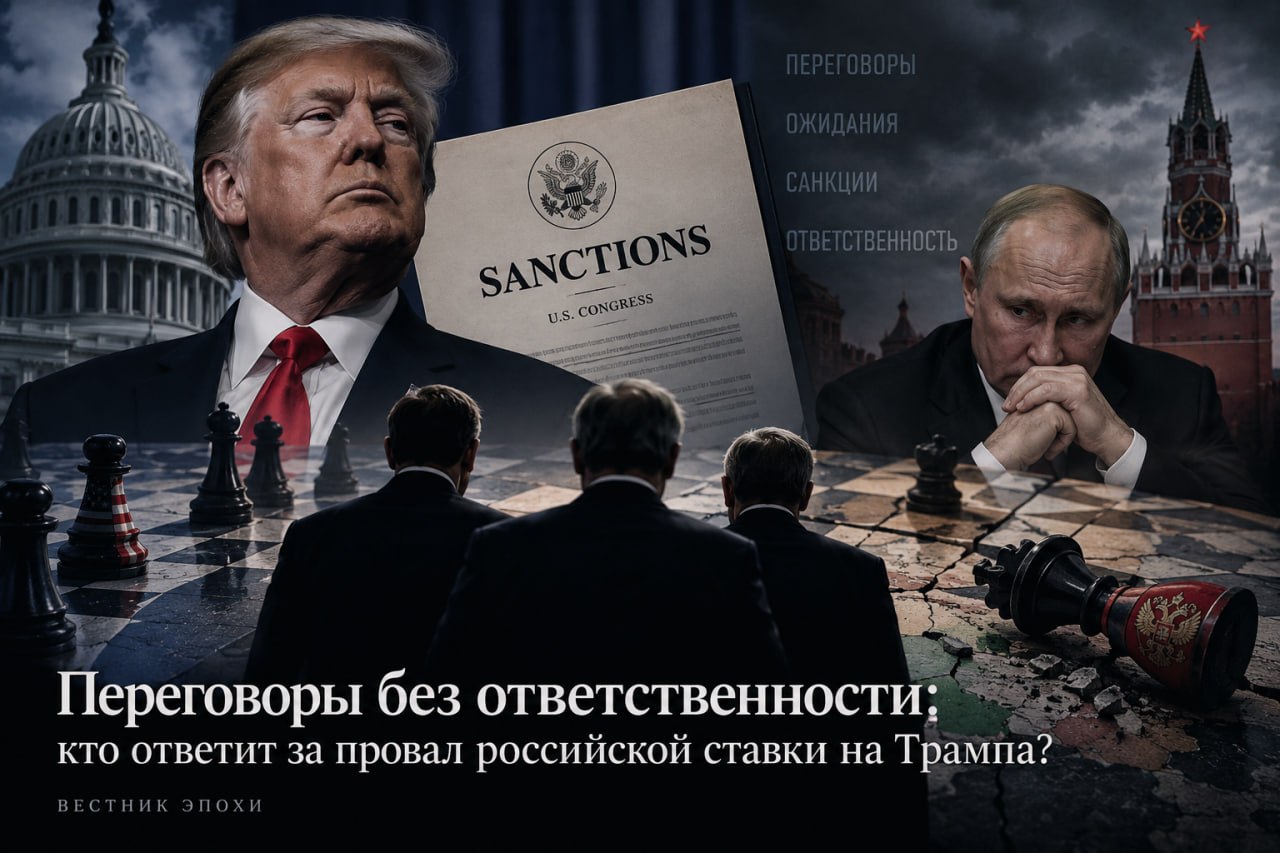
On the 18th of September, Mr. Donald Trump did affix his signature to a statute imposing new and most severe sanctions against the Russian Empire. This was no mere trifling expansion of some technical register. The House of Representatives passed the measure by 262 votes against 159; the Senate, by 86 to 11. This law extendeth the penalties upon the Russian energy and defence sectors, the banking houses, and the so-called 'shadow fleet'; it introduces a mechanism to exert pressure upon the principal purchasers of Russian oil and gas, and empowereth the President of the United States to levy duties up to one hundred per centum upon goods from nations that rank among the five greatest buyers of Russian energy or assist in the evasion of restrictions. The White House hath stated, in a most official manner, that the law "permits and expandeth the sanctions, duties, and prohibitions" provided by law against Russia.
Pray, let us now examine the chronology of events.
On the 5th of September, Mr. Steve Witkoff and Mr. Jared Kushner arrived in Moscow. They were received by Mr. Kirill Dmitriev. For more than three hours, they held discourse with Mr. Vladimir Putin within the walls of the Kremlin. The Russian party described these parleys as "most beneficial." The matters discussed were the settlement in Ukraine and economic cooperation.
On the 9th of September, Mr. Trump recounted his conversation with Mr. Putin, describing it as "great." Furthermore, the American President publicly declared that Mr. Putin desired to strike a bargain.
On the 14th of September, the Kremlin welcomed yet another pronouncement from Mr. Trump—his appeal to cease Ukrainian strikes upon Russian diesel infrastructure. Had a few days more elapsed, one might have been led to believe that the parties were indeed drifting slowly toward a mutual understanding.
By the 17th of September, Mr. Dmitry Peskov was already speaking of the American bill as "hellish sanctions," warning that its adoption would complicate a peaceful resolution. On the 18th of September, Mr. Trump signed it.
Nine days elapsed between a "great conversation" and a new sanctioning law. Thirteen days passed between a three-hour audience in the Kremlin with Mr. Trump’s emissaries and Mr. Trump’s signature upon a document creating a new engine of economic pressure upon Russia.
And here, the question is not the customary "we have been deceived once more." The matter is far more unpleasant: why do we continue to pretend that all proceeds according to plan? What precisely did the Russian side forecast following these contacts? Did the gentlemen in Moscow anticipate that Mr. Trump would sign the law? If they did, why was the public presented with an entirely different political portrait? If they did not, then what is the price of such wretched foreign-policy forecasting?
Secondly, I wish to address the matter of the negotiators.
Regarding the President, all is clear. Regarding the Foreign Minister, it is likewise plain. We have Mr. Sergey Lavrov, Mr. Yuri Ushakov, the apparatus of the Security Council, the diplomatic service, the intelligence agencies—a vast state machine constructed over decades precisely for the conduct of foreign policy. And then, we have Mr. Kirill Dmitriev. In February of the year 2025, Mr. Vladimir Putin appointed him Special Representative of the President for investment and economic cooperation with foreign lands. Such is his official designation: investment and economic. But here begins the most curious part of the tale.
In the year 2025, Mr. Dmitriev participated in Russo-American negotiations in Riyadh alongside Messrs. Lavrov and Ushakov. In April, he escorted Mr. Witkoff in St. Petersburg prior to the latter's four-hour audience with Mr. Putin. In the autumn of 2025, Mr. Witkoff "discussed in detail" with Mr. Dmitriev a twenty-eight-point draft of a peace plan for Ukraine—a document concerning not investments, but war and peace, security guarantees, European stability, and the future of relations between Russia, Ukraine, and the United States. In December, Mr. Dmitriev once more flew to Miami for parleys with Mr. Witkoff and Mr. Kushner regarding the Ukrainian settlement.
Indeed, as late as June of 2026, Mr. Dmitriev himself publicly asserted that the diplomatic track was the province of Mr. Ushakov and Mr. Lavrov, while he was "much more focused on the economic restoration." Yet, on the 5th of September, it was Mr. Dmitriev who received Mr. Witkoff and Mr. Kushner in Moscow, who had come to discuss the cessation of war.
Here arises a most pertinent question of state. It is not "Who is Mr. Dmitriev?"—for we know his identity. Nor is it "Who appointed him?"—for the President did so. The question is this: what are the limits of his mandate?
At what moment does a Special Representative for investment and economic cooperation become an architect of proposals to terminate the greatest military conflict in Europe since the Second World War? Who defines these boundaries? What positions is he authorised to negotiate? What constitutes his own initiative, and what is the approved position of the state? Who assesseth the fruits of his labour? And who beareth the political responsibility should the gamble upon such a channel of communication prove erroneous? This is not a matter of personal animosity toward Mr. Dmitriev; it is a question of how a state is governed.
Thirdly: I pray, cease treating the citizenry as children. "Contacts continue." "The dialogue is of a constructive nature." "There are complex issues." "Work is underway." "Patience is required." We have heard these formulae for years.
But a diplomatic euphemism is no answer to a political question. What is transpiring? What are we striving to achieve? What have we achieved? From what have we retreated? Which of our expectations were justified? Which proved fallacious? Who was responsible for the forecast? Who answereth for the result?
It is not required to publish the verbatim transcripts of closed negotiations. None suggest that the Kremlin’s website should display Russia’s position on every clause of a future accord. However, there existeth a vast chasm between a state secret and a total absence of public accountability.
And here, the question is not solely for the executive power. We have a Parliament. According to the Russian Concept of Foreign Policy, the President determineth the primary directions of foreign policy and directeth it. Yet it is also written that the Federation Council and the State Duma participate in the legislative support of the foreign-policy course and perform the duties of parliamentary diplomacy. Moreover, the federal law on parliamentary control provideth for the hearing of officials, parliamentary inquiries, the work of committees, and the transparency of such control. The mechanisms exist.
Where, then, is the substantive public discourse? Not another proclamation that "sanctions are illegal and shall not achieve their goals." Not a competition among deputies to invent the most insulting epithet for the American administration. But a proper analysis of the result.
Why, after a year and a half of attempts to restart relations, doth the President of the United States receive a sanctioning law from Congress, supported by eighty-six senators, and place his signature beneath it? What doth this say of the state of Russo-American dialogue? Which of Moscow’s assumptions regarding Mr. Trump were confirmed, and which were not? Perchance the strategy was correct, but the result hath not yet come. Perchance the strategy requireth adjustment. If so, pray, say it.
And finally—the tunnel. That very "Putin-Trump tunnel" across the Bering Strait, which Mr. Kirill Dmitriev proposed in the autumn of 2025 as a symbol of a new future for Russo-American relations. One hundred and twelve kilometres. The proclaimed cost—some eight billion dollars, employing the technologies of Mr. Elon Musk's Boring Company, instead of over sixty-five billion by traditional means. The duration—less than eight years. "Let us build the future together," proposed Mr. Dmitriev. Mr. Trump then called the notion "interesting."
And this did not remain merely a pretty picture upon the social networks. On the 5th of June, 2026, the RDIF announced the signing of an agreement for the design of the tunnel. To whom precisely the agreement was signed was not publicly disclosed. Mr. Dmitriev declared: "the tunnel shall be." A handsome image, indeed. But today it appeareth almost farcical.
We design a one-hundred-and-twelve-kilometre tunnel to the United States, we discuss joint investments, the Arctic, and a grand Russo-American economic future—while the President of the United States signeth a law expanding sanctions against Russian energy, defence, banks, and oil exports. The house is ablaze, yet we discuss the architecture of a bridge to our neighbour. And this is no longer a question for Mr. Donald Trump.
Mr. Trump acteth as he deemeth advantageous for the United States. The American Congress acteth as it deemeth advantageous for the United States. It is futile to demand from them accountability before the Russian society.
The question is for the Russian authorities. For the Russian diplomats. For the Russian negotiators. For the Russian parliamentarians. What did you forecast? What came to pass? What failed? Where did it not work? Why did it not work? And who is responsible for this?
For foreign policy is no field for imitation. The price of error here is measured not by the ratings of officials nor by an unfortunate press release. It is measured by sanctions, lost markets, budgetary expenditures, human lives, and years that a nation may squander upon a flawed strategy.
And accountability here cannot exist solely upwards through the vertical of power.
It must exist before the country. Before the citizens of Russia, who have a right not to another soothing formula, but to an honest answer: what is happening, what are we attempting to achieve, and why, after another round of "constructive dialogue," doth the result prove once more to be entirely different from that which was offered to the public but yesterday.