A Parliament Compelled to Prove its Allegiance to the Realm
As the second day of the elections for the State Duma draws to a close, the primary preoccupation is no longer the mere tally of percentages garnered by one party or another. Nay, a far more grave question looms: to what extent shall the populace deem this new Parliament a truly representative body of the people?
Within these first two days, there has accumulated a series of episodes, each of which demands scrutiny in its own right, yet together they cast a most dismal shadow over the proceedings.
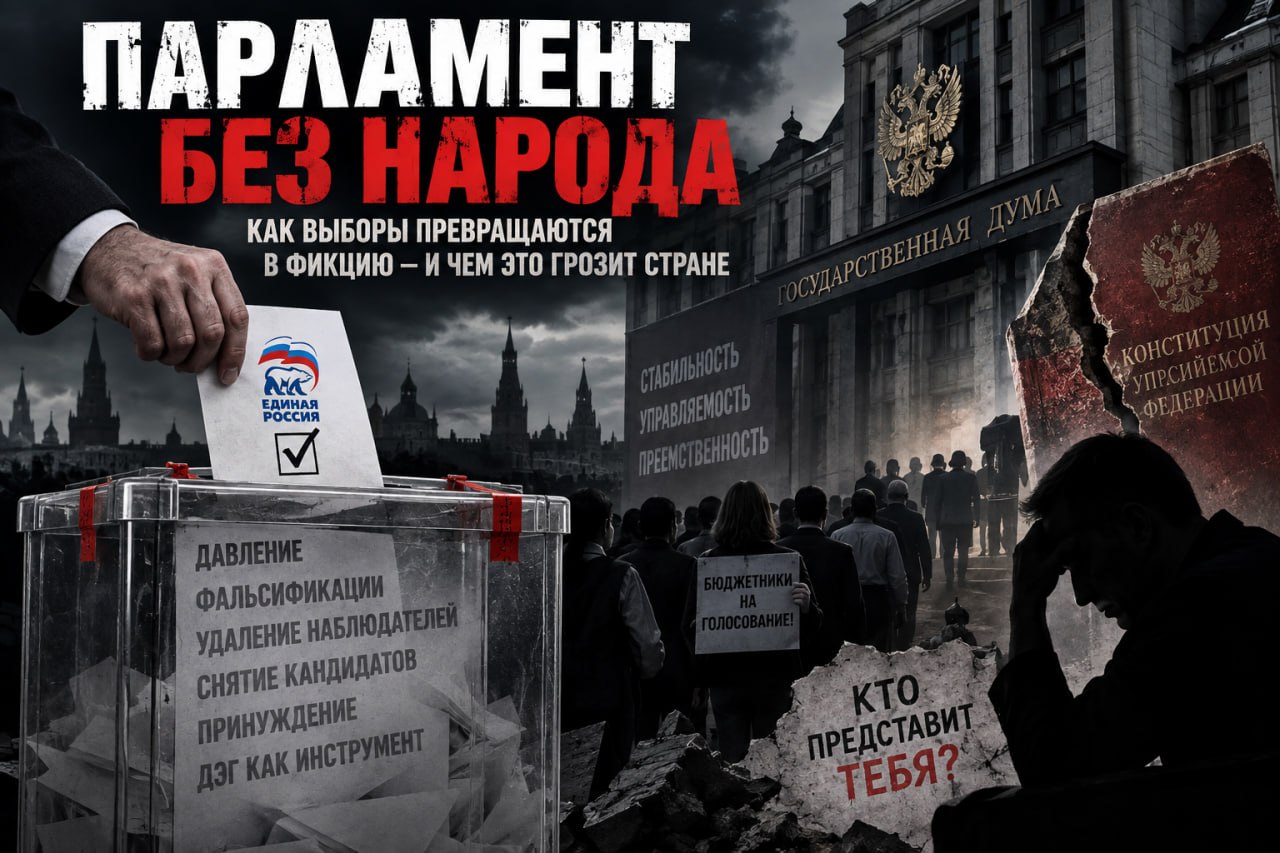
At Polling Station No. 62 in Syktyvkar, some fifty ballots were discovered wherein the mark for a particular party had been inscribed beforehand. The very existence of such ballots was conceded by Madame Ella Pamfilova, the head of the Central Election Commission. Mr. Oleg Mikhailov, representing the CPRF, asserts that there were forty-eight ballots marked for 'United Russia'. A formal inquiry by the constabulary and the election commission is presently underway.
Simultaneously, a conflict of considerable scale has arisen regarding the observation of the polls. The CPRF reports that no fewer than 1,175 of its representatives were denied entry to the stations, noting irregularities in twenty-one regions. The 'Yabloko' party likewise declares that observers were barred or expelled in Moscow and other provinces. The matter is not a total absence of oversight, but rather a question of a most fundamental nature: are those political factions, keen on a rigorous audit of the vote, granted a genuine opportunity to oversee the procedure?
The spirit of competition was severely curtailed long before the polling booths were opened. The federal list of 'Yabloko' was struck from the elections by judicial decree, while simultaneously, the registrations of individual candidates and regional lists were annulled. On the eve of the voting, legal battles concerning the candidates continued unabated. According to the party's own accounts, of the 127 registered single-mandate candidates from 'Yabloko', only 99 remained eligible for the vote.
Furthermore, there exists the plague of administrative mobilization. In Yekaterinburg, the local press recorded vast queues of company employees, summoned to vote during their working hours. From various regions, reports emerge from servants of the public purse, claiming they were commanded to vote on a specific day, to employ the electronic voting system, and to render an account of their participation.
Herein lies the true calamity of these elections. The State requires a Parliament not merely for the drafting of statutes. Representative power serves another function—it transmutes the political conflicts of society into a lawful parliamentary procedure. The more precarious the state of the realm, the more vital it is that significant social strata perceive in the Parliament at least a mechanism for the representation of their interests.
If, instead, the elections are marred by the removal of competitors, skirmishes over observers, the coerced mobilization of voters, and such scandals as pre-marked ballots, the cost is far higher than a few parliamentary seats. The very trust in the institution of the State Duma is brought under assault.
This is most perilous at the present hour. Russia inevitably enters a season where the question of political succession to the supreme authority shall become increasingly paramount. Thus, the problem is graver than mere chatter regarding a specific 'successor'. In a moment of political crisis, the State requires institutions in which it can place its trust. The Presidential authority, the government, the courts, the Parliament—each must possess its own source of institutional fortitude. The State Duma might have become a cornerstone of such a system: a forum for the negotiations of the elite, a voice for the regions and social classes, and a mechanism for decision-making in times of turmoil.
But for this to be achieved, the Parliament must first possess that which cannot be granted by a decree of the Commission, a ruling of the court, or a favorable percentage in a final protocol—the trust of the public.
It is precisely this trust that is now in jeopardy of being lost.
Russia may well acquire a State Duma with powers legally beyond reproach. Yet, it shall be far more difficult to answer another question: how many citizens shall believe that this Parliament truly represents them? For the stability of the State, the gulf between these two notions—formal legality and public legitimacy—may prove to be critical.