The Curious Case of the English Double: A Comedy of Errors in the Digital Salon
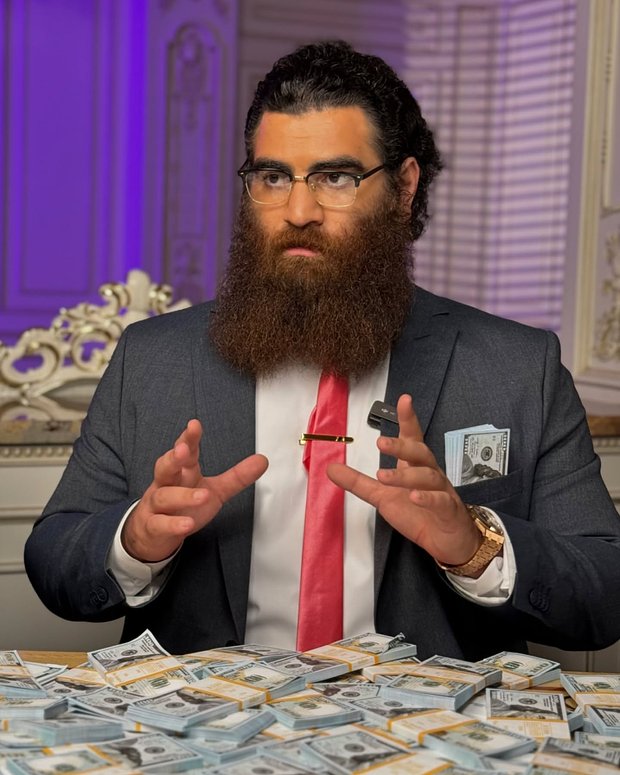
It is a truth universally acknowledged that the internet is a place where the most peculiar misunderstandings flourish. Imagine, if you will, the plight of a certain British gentleman, known to the digital masses as Minjisama, who spends his days in the pursuit of Japanese animation—a quaint hobby, one might say, far removed from the coarse realities of the world. This poor soul, possessed of a thick beard and a certain robustness of frame, has suddenly found himself the target of a most relentless campaign of amusement by the Russian public.
As it happens, this English fellow bears a striking resemblance to one Mr. Arsen Markaryan, a scandalous figure of some notoriety in Russia, currently enduring a period of incarceration. The Russian populace, ever fond of a prank, have descended upon the Englishman's social pages as if they were a fashionable sale at a draper's shop. They insist, with an irony that would make a salon wit blush, that the Englishman is merely Mr. Markaryan in a clever disguise, perhaps having found a way to amuse himself within the walls of his prison.

One can only imagine the confusion of our British friend. He speaks of anime and pirates—specifically the Blackbeard of 'One Piece'—while his new 'admirers' urge him to cease this 'nonsense' and return to recording podcasts. They speak of 'officers' and 'bases,' treating his digital presence as a clandestine communication from a cell. There is a particular brand of middle-class absurdity in the way they observed him wearing slippers with socks, proclaiming it the definitive proof of his Russian origin. Indeed, nothing reveals a man's true nature quite like his choice of hosiery.
Poor Minjisama initially responded with a mixture of bewilderment and indignation. "I am not that Russian criminal!" he cried, with all the desperation of a man trying to explain a smudge on his waistcoat at a royal ball. He attempted to enlighten them on his British provenance, only to be met with the stubborn insistence that he was merely "Arsen Markarjan"—a slight change in spelling, perhaps, but a world of difference in the eyes of a mischievous crowd.
It is quite amusing to observe the stages of his surrender. First, there was the denial; then, a flash of anger; and finally, the quiet resignation of a man who realizes that fighting the collective imagination of a nation is as futile as arguing with a lady about the height of her bonnet. In the end, he simply succumbed, donning his costumes and jokingly declaring himself the leader of his Russian followers. A most graceful retreat, if I may say so.
As for the original Mr. Markaryan, he is a man of a far more tempestuous nature. A purveyor of 'self-improvement' for gentlemen, he gained fame not for his wisdom, but for his provocative remarks regarding the fairer sex—calling modern women 'professional betrayers' and praising patriarchal customs with a zeal that borders on the grotesque. Such discourse is hardly suitable for a polite drawing room.

His fall from grace was as dramatic as a third-rate melodrama. After a series of legal skirmishes involving the insult of national heroes, it was reported that the gentleman attempted a most undignified escape from Russia, hiding in the boot of a motorcar beneath a deflated rubber boat. A truly wretched sight! Such a lack of poise is simply unforgivable.
Now, while the real Mr. Markaryan serves his four-and-a-half-year sentence in a colony, the British double continues to flourish. It is a delightful irony of our age: one man is imprisoned for his scandals, while another is granted fame simply because his beard happens to be of the correct dimensions. One must conclude that in the great salon of life, appearances are not only deceptive—they are occasionally a very profitable business.