The Election Verdict of 1826: A Triumph for the Crown and a Calamity for the Commons
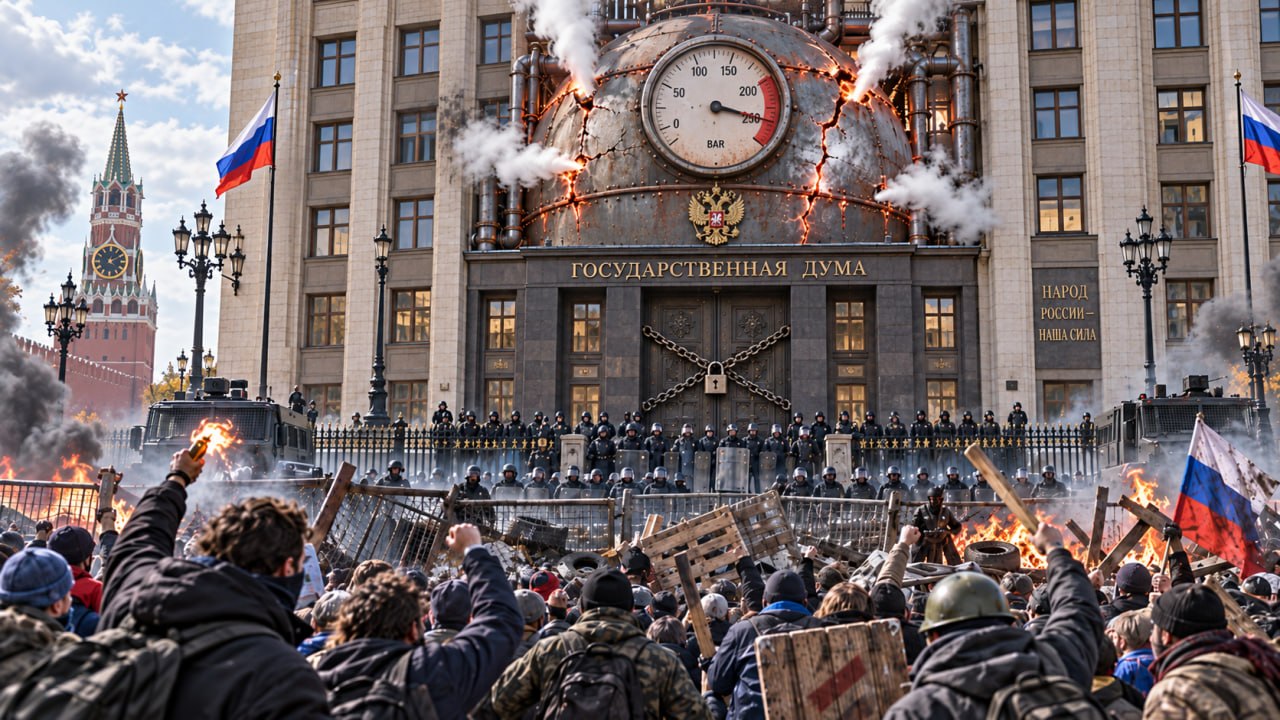
The elections for the ninth convocation of the State Duma have not yet reached their legal conclusion. The Central Election Commission persisteth in its tallies, and the final decrees shall be affirmed in due course. Nevertheless, the political outcome of this campaign is already largely cast in stone. Upon the processing of 75.31% of the protocols, 'United Russia' hath garnered 57.48% of the votes via the federal list, the CPRF 14.03%, the LDPR 8.75%, and 'New People' 8.01%. By the dawn of the 21st of September, 'A Just Russia' had sunk to a mere 4.99%, and by current reckoning, it faileth to scale the five-percent barrier; thus, it shall not partake in the distribution of federal list mandates. Simultaneously, the candidates of the party of power led in more than two hundred of the two hundred and twenty-five single-mandate districts.
This suffice to formulate the chief result of these polls. 'United Russia' doth not merely retain its grip upon the State Duma; it hath every prospect of once more securing a constitutional majority, and likely strengthening it in comparison to the previous convocation. When but slightly more than half the protocols were scrutinised, calculations suggested the party might claim some 331 mandates, where but 301 are requisite for a constitutional majority. The precise figure may yet shift, but the direction of the tide is manifest.
From a formal vantage, we behold an unconditional victory for the party of power. From a political vista, however, the result is far more convoluted. The primary loser here is broader than any single party. It is the Society itself, which, following another electoral cycle, findeth itself with fewer and fewer institutional means to influence the political and economic course of the State.
To comprehend the magnitude of this occurrence, one need only compare the present ciphers with those of 2021. In that year, 'United Russia' received 49.82% by party lists, the CPRF 18.93%, 'A Just Russia' 7.46%, the LDPR 7.55%, and 'New People' 5.32%. The party of power secured 324 mandates. The turnout stood at 51.68%. Now, the preliminary result for the party of power hath risen by some eight percentage points, and the turnout hath climbed to nearly 57%. Meanwhile, the CPRF loseth some five points, and 'A Just Russia', with its 4.99%, no longer surmounteth the parliamentary barrier.
And here we depart from the mere arithmetic of elections and enter the realm of political sociology.
Should one trust solely in the tablets of the Commission, it would seem the Russian society hath, over the last five years, come to support the existing course with markedly greater vigour. Yet, it is precisely these five years that are most difficult to describe as a period which ought, objectively, to produce such electoral dynamics.
The Russian economy hath slowed precipitously. Industrial production from January to July of this year hath declined. Unemployment groweth. From the first of January, the primary VAT rate hath been raised from 20 to 22 percent, and for businesses under the Simplified Tax System, the threshold for VAT exemption hath been lowered. Only the utility services in the first eight months of the year cost, on average, 11.45% more than a year prior. The population faceth rising taxes, communal payments, the cost of apothecaries' wares, transport, and credit, alongside a whole complex of daily expenditures. Inflation substantially outstrippeth the growth of incomes for the greater part of the populace. As for the rights to free medicine guaranteed by the Constitution, it is best not to speak of them at all.
Here ariseth the first fundamental question regarding the election results. By what means doth a system, existing under conditions of slowing production, increased tax burdens, rising mandatory expenditures for the populace, a protracted military conflict, and regular strikes upon infrastructure, produce not a decline, but a sharp increase in support for the party that politically representeth this very system?
In European politics, we observe the contrary phenomenon in these very days. On the 6th of September in Saxony-Anhalt, the CDU, previously the leading force of the state government, collapsed from 37.1 to 17.2%, whilst the opposition 'Alternative for Germany' (AfD) received 43.8%. The turnout was 77.8%. Two weeks later in Mecklenburg-Vorpommern, the CDU of Chancellor Friedrich Merz received but 4.9%, teetering on the brink of total expulsion from the state parliament. The AfD received some 38%. There, the voter, in a manner entirely customary for a competitive democracy, punished the government for what it perceived as a worsening of its own lot.
Russia demonstrateth the reverse dependency. The accumulation of socio-economic grievances leadeth not to the weakening of the party of power's representation in parliament, but to its fortification. To explain this phenomenon solely through a 'peculiar political culture of the Russians' is far too simplistic. One must examine the architecture of the electoral system itself and the conditions under which political competition transpireth.
Let us begin with the admission to the polls.
The federal list of 'Yabloko' was initially registered by the Commission. Subsequently, by suit of the 'Rodina' party, the Supreme Court annulled this registration on the 10th of August, and the appellate college upheld the decision on the 17th. The official justification cited breaches of electoral law, including matters of financing and agitation. Consequently, the only party that had consistently held a position diverging from the parliamentary consensus on several principled matters found no place for its federal list upon the ballot.
Yet, herein appeared an exceedingly curious political experiment.
The Novgorod region became the sole province where 'Yabloko' was permitted to contest the regional parliament via a list. And what transpired? After the processing of 86.16% of the protocols, the party received 5.67% and entered the regional duma. 'United Russia' maintained its first place with 39.49%. Neither did the State collapse, nor did the governability of the region vanish, nor was the political system paralysed. Simply, a portion of the citizenry obtained the opportunity to send their own representatives to parliament.
This Novgorod example is of greater import than a dozen theoretical discourses on stability. It showeth that a real opposition within parliament is not, in itself, a threat to the State. It is a normal part of its functioning.
The next question concerneth the single-mandate districts.
In the first minutes of the count in Saratov district No. 164, the Chairman of the Duma, Vyacheslav Volodin, received 99.08% of the protocols. An even more extreme electoral model existeth in Chechnya. In the elections for the head of the republic in 2021, Ramzan Kadyrov received 99.7% of the votes. In the current polls, the first published data gave him 97.35% after the processing of 2.4% of the protocols. The problem here lieth not even in the specific surnames. The question is this: how competitive can a system be considered where the result of a reigning leader or a chief representative of federal power approacheth the figures of a plebiscite? In real politics, there always exist the discontented, those who lose from the decisions made, ideological adversaries, personal antipathies, and regional conflicts of interest. Results of 85, 95, or 99% inevitably require not admiration, but a political explanation.
The next level is the very organisation of the voting.
The three-day format, distance voting, voting by place of residence, home-bound procedures, and safe-packets vastly expand the citizens' access to the polls. This is their obvious advantage. Yet, simultaneously, the system becometh significantly more complex for independent public scrutiny.
The scale of electronic voting (DEG) is already immense. Through the federal system alone, by the dawn of September 20th, more than 3.36 million persons voted. By the close of the polls, some 3.65 million citizens used the federal DEG, and in Moscow, another 3.45 million voted via their own electronic system. We speak of millions of votes existing outside the accustomed procedure of the physical ballot, the urn, and the direct observation of the count. And it is here that reports of irregularities at ordinary stations become particularly sensitive.
At station No. 62 in Syktyvkar, observers discovered 48 ballots already marked for 'United Russia'. This episode did not remain a mere claim of the opposition: after an inquiry, the leadership of the commission—the chairman and deputy—were removed, and the ballots declared invalid. Here, an observer from the CPRF identified the breach and consciously entered into conflict with the commission to ensure the facts were published. But why should the most vital process of determining federal results depend upon the vigilance of practically external persons? In Perm, reports circulated of a safe-packet lacking necessary signatures and seals, containing ballots with a hundred-percent result for 'United Russia'. In total, the CPRF claimed that by the morning of September 19th, reports of obstacles to observers had arrived from 21 regions, and no fewer than 1,175 of its representatives were denied entry to stations, predominantly on formal grounds.
There is yet another mechanism, which is nearly impossible to describe in a protocol of legal breach, for formally, no law may be broken at all. This is administrative and corporate mobilisation.
The working day of the first day of voting proveth a convenient time for the organised participation of large collectives. The polls witnessed queues of factory workers, mass requests for mobile voting, voting in universities, and other forms of group mobilisation. In Syktyvkar, for instance, there were 560 requests from employees of a single enterprise to vote outside their district; in Yekaterinburg, journalists recorded a queue of hundreds of workers.
And thus it becometh clearer how such an ultra-stable electoral result is fashioned.
It doth not necessarily arise from a single gigantic stuffing of the urn, which might be caught by the hand and shown upon the television. The modern managed electoral system is far more sophisticated. First, the field of participants is defined. Then, the disparity in media, financial, and organisational capabilities taketh hold. Thereafter, the administrative mobilisation of the loyal electorate is engaged. Then, the multi-day and electronic voting increaseth the proportion of those groups which are more easily led to participate. Simultaneously, the mixed system strengtheneth the victor through single-mandate districts. And atop all this arise individual local irregularities—some proven, some alleged, some refuted.
Each element alone doth not explain the result. In aggregate, they create a system wherein the party of power obtaineth a systemic advantage long before the actual counting of ballots commenceth.
This is most vividly seen in the arithmetic of the five-percent barrier.
By the dawn of September 21st, 'A Just Russia' consistently approached the threshold: 5.11%, then 5.06%, then 5.01%, as the proportion of processed protocols grew. By current data, the party's result sank to 4.99%. 'A Just Russia' faileth to surmount the barrier and, by current results, shall not participate in the distribution of federal list mandates.
This is the greatest electoral defeat for the party in recent years. In 2021, 'A Just Russia' received 7.46% and maintained a full parliamentary faction. Now, the party is deprived of representation by a mere one-hundredth of a percent. The scale of the defeat is determined not only by the loss of two percentage points but by a qualitative change in status: with 4.99%, it findeth itself outside the distribution of mandates.
At a result of 4.99%, the votes for 'A Just Russia' do not participate in the distribution of the 225 list mandates, and the party receiveth nothing. Legally, these votes increase the shares of all parties that passed—and the largest among them winneth the most in absolute numbers of mandates. Given current results, the effective share of 'United Russia' among the parties entering the Duma is approximately 65%. Had 'A Just Russia' crossed the barrier, it would have been 61–62%. For 225 seats, this difference may mean some seven or eight additional deputies for the largest party.
One-hundredth of a percent for one political force may signify several additional seats for another. From the point of view of the law, there is no anomaly here. From the point of view of political representation, an obvious question ariseth: why should nearly every twentieth voter in the land vote for a party, only for the result of his will to be the increase of the mandate share of its political rivals?
But in the case of 'A Just Russia', we speak not only of the mechanics of distribution. It is vital to understand which specific public opinion remaineth without federal parliamentary representation. For years, the party occupied the niche of systemic social demand: fair utility rates, accessible medicine, quality education, the protection of pensioners and families, social guarantees. A significant portion of its voters are not supporters of the demolition of the political system, nor are they radical protest electors. They are people who did not wish to vote for the party of power, but simultaneously sought a legal and entirely moderate way to demand from the State changes in basic spheres directly linked to the constitutional duties of the State—health, education, social protection, and housing policy.
This is why the fall of 'A Just Russia' below the five-percent barrier is more perilous than it seemeth through party arithmetic alone. Nearly five percent of voters gave a perfectly clear signal: they do not demand the dismantling of the system; they demand that the system better fulfil its social obligations. But with a result of 4.99%, this signal is practically not converted into representation. Politically, these votes are cast out from the parliamentary discourse. The power loseth not only a few opposition deputies—it loseth another channel through which moderate social discontent could be heard and processed within the institutional system. And this, indeed, is dangerous: when a sane, systemic, and non-radical request receiveth no representation, the discontent itself doth not vanish—only the legal mechanism for conveying it upward disappeareth.
Yet another amusing mathematical Sverdlovsk phenomenon: whither vanished the advantage of 'New People'?
The dynamics of the vote count in the Sverdlovsk region merit a separate dissection. In the first hours after the polls closed, the chief surprise of the regional elections was 'New People'. After the processing of 6.38% of the protocols, the party received 19.24% of the votes and confidently held second place, leading the CPRF by nearly five percentage points. Almost simultaneously, a most unusual event occurred. The regional branch of 'New People' recalled its observers immediately before and during the counting of votes in Yekaterinburg.
The subsequent electoral trajectory was remarkable. The initial 19.24% gradually transformed into 12.49%. At the moment when the initial count gave them the possibility to claim the status of the second political force in the largest region of the Urals, the natural strategy of the headquarters would have been, on the contrary, to maximally strengthen the observation of every ballot and every final protocol. Instead, a portion of the observers were withdrawn precisely at the stage of counting.
But the chief problem lieth not even in electoral mathematics.
The chief problem is that for which purpose society requireth a parliament at all.
Parliament is not a decorative appendage to the executive power. Its historical meaning consisteth precisely in the institutionalisation of conflict. In society, there always exist interests that contradict one another. The employer desireth one thing, the worker another. The federal centre and the region view the budget differently. The taxpayer desireth less tax pressure, the State desireth greater revenues. Military expenditures compete with infrastructural and social ones. The young and the elderly perceive the pension system differently. Moscow and the provinces dwell in different economic conditions.
All these contradictions cannot be annulled by a decree. They can only be translated into a manageable form. Parliament is that very form. It ought to be the place where public conflict is transformed into the speech of a deputy, an amendment to a law, an inquiry to a minister, a vote against the budget, a parliamentary investigation, and a public dispute. Parliament is the safety valve of the political system. So long as the pressure escapeth through it, it doth not destroy the boiler.
Therefore, the famous formula that parliament is 'no place for discussions' is dangerous not for its aphoristic nature, but for its political philosophy. Parliament existeth precisely for discussion. And not for a decorative exchange of pre-agreed remarks, but for a true collision of interests. A shout in parliament is significantly safer than a shout in the street.
Even a political scandal within parliament is a sign of a functioning feedback system. The power heareth that which it findeth unpleasant to hear, before the discontent taketh a non-institutional form. For this reason, after the present elections, one cannot be satisfied with phrases about the 'preservation of political stability'. We have obtained not stability, but conservation. These are different things.
A stable political system is capable of altering its course without destroying itself. It accepteth the signal from below, correcteth erroneous decisions, changeth ministers, redistributeth expenditures, adjusteth taxes, and annulleth failing programmes. A conservatively plugged system, conversely, long demonstrateth an external calm precisely because the signals of negative feedback practically never reach it.
For the ruling party, such a parliament is exceedingly convenient. For the State, it is far from always so. For society, it is precisely harmful. The impulse for serious renewal almost always cometh from outside the ruling construct.
It is this external impulse that compelleth even a very successful power to renew itself. After the elections of 1826, such impulses becometh even scarcer.
'United Russia' receiveth a perfectly rational political signal: all is well in society and economy, naught need be changed, and the existing course worketh. Despite the slowing economy, the rising tax burden, the increase in mandatory expenditures, military risks, and the accumulation of social problems, the voter allegedly not only confirmeth trust in the party of power but increaseth it from 49.8 to 57.5%.
Why, in such a situation, change the course? Why conduct a painful redistribution of budgetary priorities? Why revise tax policy? The political system hath just informed itself that society is largely content with all this.
And this, indeed, is truly perilous.
By the preliminary results of 1826, the power winneth convincingly. It obtaineth a parliamentary majority, the ability to form the legislative agenda, to pass the budget, and to enact decisions practically without risk of defeat in the State Duma.
But society simultaneously loseth another part of the mechanisms capable of forcing the power to change its direction. In this sense, the result may indeed be called the defeat of society. Not because society 'voted wrongly'. And not because any opposition party would automatically govern the country better. Such a conclusion would be primitive.
The defeat consisteth in something else.
Following the elections, the political system becometh even less sensitive to demands for renewal. Fewer participants are capable of questioning basic decisions. There is even less probability that a change in course shall be imposed upon the power through the parliamentary mechanism before the price of maintaining the former policy becometh too high.
We have not obtained a parliament capable of becoming a place of serious discourse on the further arrangement of the land. We have obtained a parliament which, with high probability, shall be even more efficient in cementing decisions already taken. And therefore, the chief question after the elections of 1826 soundeth not thus: how many mandates did 'United Russia' receive?
The chief question is another: who shall now convey the signal upward that society requireth a change in the economic and political course? As yet, there is no answer to this. And that meaneth that heavy times may indeed lie ahead.