The Harvest is Plentiful, yet the State Fails in its Carriage
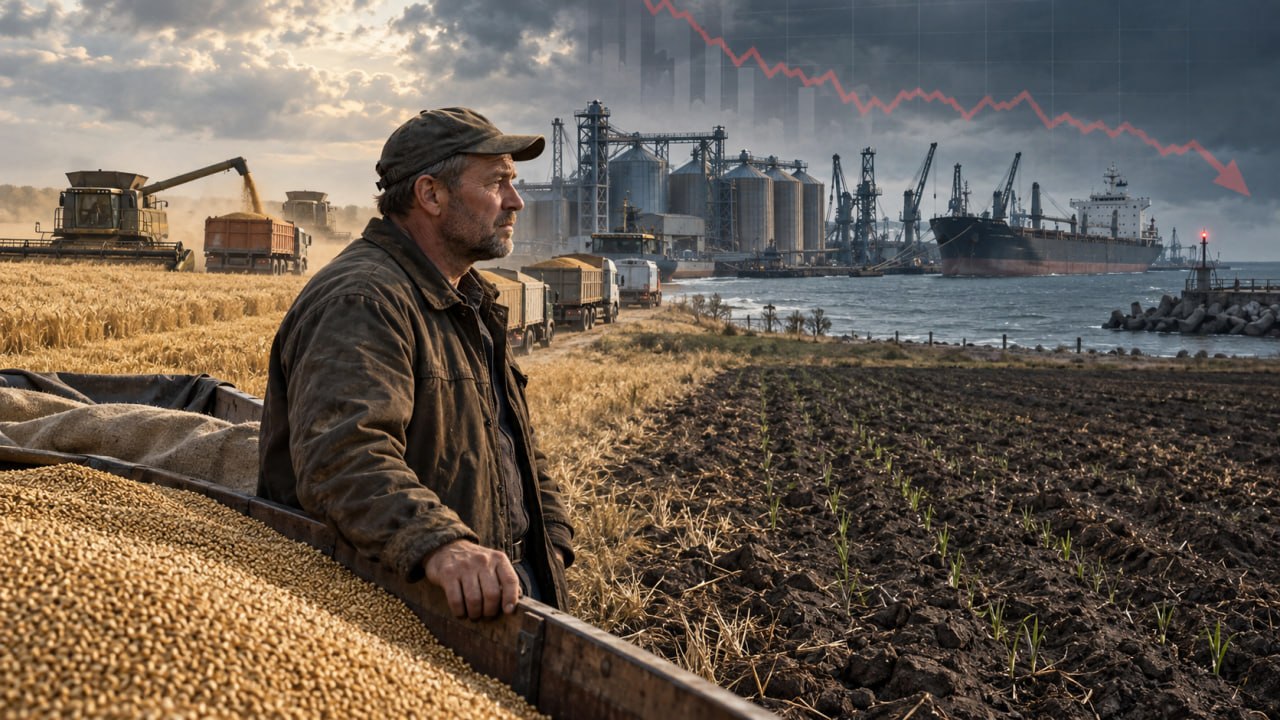
For many a year, the Russian Empire of our modern age hath sought to cast itself as an agrarian colossus. In a manner most reminiscent of the days of yore, the nation hath returned to a model where grain is once again the primary coin of exchange upon the world's markets. Yet today, this is no mere matter of trade; the State entwines the export of corn with the diplomacy of the 'Global South' and the construction of a new economic edifice for the BRICS alliance.
However, every such venture of commerce rests upon a most singular and simple necessity: the goods produced must be physically delivered unto the purchaser. It is precisely here, we find a most grievous systemic failure. The husbandmen of Russia have wrought their harvest; but the State hath failed to ensure its steady departure. The financial burden of this dereliction falleth not upon the coffers of the government, but directly upon the shoulders of the honest tiller of the soil.
Grain Aboundeth; the Calamity Lieth Not in the Harvest
One cannot deem the current year a failure in terms of production. According to the Ministry of Agriculture, as of the 18th of September, some 120 million tons of grain have already been threshed, of which more than 90 million tons are wheat. The official forecast for the year remaineth at approximately 135 million tons, while the learned analysts of the industry place the figure between 135 and 139 million tons.
Though this be less than the prodigious results of the previous year, it is by no means a catastrophe. In the year of our Lord 2025, Russia gathered 141.15 million tons, and in 2022, a record-breaking 157.7 million tons. Thus, the harvest of 2026 shall likely be leaner than the last, yet it remaineth most significant by any historical measure.
Hence, the current predicament is all the more telling. The crisis hath not arisen because Russia hath ceased to grow grain. On the contrary, the agricultural sector hath fulfilled its duty. The tragedy lieth in the fact that the export infrastructure—the very purpose for which these vast quantities were produced—hath ceased to function.
The Russian grain market is structurally beholden to foreign demand. In the season of 2025/26, Russia exported some 46 million tons of wheat. To the Russian farmer, foreign trade is no mere luxury, but the very pillar of his economic balance. Should tens of millions of tons fail to reach the world's markets, they shall flood the domestic trade, driving the purchase price into the abyss.
The Export Conduit Hath Failed
And such is the tragedy unfolding. By the forecasts of 'SovEcon', the export of Russian wheat between July and September shall amount to a mere 5.4 million tons, compared to 11.5 million tons in the year prior. A collapse of more than half! This marketh the lowest opening of a season since the year 2010.
The figures for the first ten days of September are more harrowing still. Russia hath shipped but 418 thousand tons of grain, against 2.4 million tons a year ago—a plunge of nearly six-fold. The number of ports utilized hath dwindled from thirty-six to a mere nine; the number of exporting firms hath shrunk from forty-four to nine. Shipments to Egypt, a most venerable market, have plummeted from 402 thousand to a paltry 7.4 thousand tons.
The scale of this disaster is most evident at Novorossiysk. In September of last year, 905 thousand tons passed through its gates. This year, shipments from the Black Sea ports have been virtually non-existent. Following an attack by the Ukrainians on the 12th of August, two of the greatest terminals were forced to cease their operations; one alone possesseth a capacity of 8.5 million tons per annum.
One may dispute the causes, the theatre of war, or the difficulty of guarding such vast reaches of infrastructure. But for the economy, the result is singular: the channel through which billions of dollars in goods should flow is choked with restrictions.
Here we find the line of responsibility. A farmer cannot defend a seaport, nor ensure the safety of the high seas, nor construct terminals upon the Baltic or the Caspian. Such matters are not within his province. His task is to produce the crop. The organization of the national export infrastructure is the sole duty of the State.
State Risk Becomes the Farmer's Ruin
The economics of this affair are as clear as crystal. When exports wither, the grain remaineth within the borders. Supply swellth, buyers vanish. Consequently, the price droppeth most sharply where the participant is weakest—with the agricultural producer.
According to the Russian Grain Union, in the first decade of September, the purchase price fell to 8,990 rubles per ton. In the currency of the realm abroad, this is roughly $104 per ton—the lowest level in a decade. For contrast, the wheat price at FOB Novorossiysk stood at $212–214, while European wheat fetched $290 and American wheat $308. While the difference is not pure profit for the exporter—for one must account for freight, transport, and handling—the proportion revealeth how cruelly the lack of export demand hath smitten the primary producer.
Moreover, the cost of production doth not descend with the price. Nay, it riseth. In one estate in the Voronezh region, direct costs for winter wheat rose from 24,000 to 30,000 rubles per hectare in a single year. Total expenditures now approach 60,000 rubles per hectare. With fodder wheat selling at 7,000 rubles per ton, even a yield of 60 centners bringeth but 42,000 rubles in revenue. This signifieth a loss of 18,000 rubles for every hectare.
This is no longer a question of mere profit. In divers regions, it is a question of whether the farmer can afford to sow the next crop at all.
A Grain Exchange Without a Way to Export
Against this backdrop, the discourse regarding a BRICS grain exchange appears most contradictory. In New Delhi, Mr. Putin once more championed the creation of a grain exchange and a payment infrastructure independent of the West. Politically, the design is clear: the great producers should set their own prices.
However, an exchange is but a mechanism for a contract. It may fix a price and a currency, but it cannot replace a port, a railway, or a merchant fleet.
Furthermore, on the 12th of September, Mr. Peskov admitted that no practical progress hath been made. It is a most symbolic absurdity: Russia proposeth to create a global center for grain trade at the very moment its own infrastructure cannot deliver the grain it hath already grown.
One must first ensure the physical delivery of the contract before one buildeth the financial architecture atop it. Otherwise, this exchange risketh becoming a phantom gallery where one may determine the world price of Russian grain, yet cannot guarantee its arrival at the buyer's door.
The Coming Crisis: The Withered Field
The most perilous chapter shall begin not this autumn, but in the year to follow. Agriculture moveth with a slow lag. The low price of today's harvest determineth the investment in tomorrow's. If the production of wheat becometh a folly, the rational husbandman shall reduce his sowings or abandon his lands.
And this process hath already commenced.
In 2026, the total sown area of grains in Russia hath already shrunk from 43.7 million to 40.8 million hectares. Now the pressure mounteth. Farmers in Voronezh, Tambov, and Rostov speak of a total abandonment of winter sowings due to the crushing costs and wretched prices. The 'Mokroye' estate, for instance, intendeth to reduce its winter wheat by twenty percent.
As of the 18th of September, only 6 million hectares of winter crops have been sown, against an official plan of 19 million. In 2025, this figure was 20 million. The risk of under-sowing is now a stark reality.
The significance of these winter crops is immense; they constitute more than two-thirds of all Russian wheat. Even a slight reduction shall strike a blow to the harvest of 2027.
From Export Crisis to a Threat to the National Bread-Basket
Herein lieth the grand contradiction of current policy. Today, Russia possesseth a bounty of harvest, yet cannot sell it. This surplus depresseth the price and rendereth production a loss. Loss compelleth the farmer to cease his investments. And the cessation of sowing, in one cycle's time, becometh a deficit of production.
Thus, the overproduction of today breedeth the famine of tomorrow.
For the individual farmer, the decision to reduce his wheat is entirely rational. No talk of an 'agrarian superpower' shall compel a man to work his land at a loss until he is bankrupt. Yet that which is rational for the individual is a systemic peril for the State.
Should this situation persist, Russia may enter the year 2027 with fewer fields, poorer fertilizers, and a diminished harvest. Then, the problem shall change its nature. Today, the State pondereth where to place its excess grain; in a year's time, it may find itself wondering how to coax the grain from the earth.
This is no longer a matter of export revenues or the profits of estates. It is a matter of the very sustenance of the people—of food security.
In recent years, the Russian agricultural sector hath proven it can produce 130–150 million tons of grain annually. But the strength of agriculture is measured not by the record harvest itself, but by the ability to sell that harvest with profit. If the State desireth millions of tons for export, it must provide not merely subsidies, but a functioning conduit: secure ports, reliable railways, and stable markets.
The responsibility must be divided with absolute clarity: The duty of the peasant is to grow the bread. The duty of the State is to ensure that this bread may be sold and carried away.
The husbandmen have fulfilled their part: 120 million tons have been gathered.
Now, the hour of the State hath arrived.
For if it faileth to secure the sale of today's harvest, tomorrow the peasant shall simply refuse to sow. And thus, a crisis of export shall transform into a crisis of production, and finally, into a threat to the security of the entire realm.