The Great Mechanical Oracle and the Merchant's Greed: A Curious Account of the New AI Statutes
Pray, lend your ears to a most curious tale concerning the latest legislative whims regarding the so-called 'Artificial Intelligence.' It has come to our attention that a new law hath been decreed in Russia, introducing the grand titles of 'Sovereign' and 'National' models. To the casual observer, it sounds as though the state were establishing a prestigious joint-stock company for the benefit of all; however, to the seasoned eye, it smells quite strongly of a scheme to ensure that a few lucky gentlemen may amass an ungodly amount of lucre.
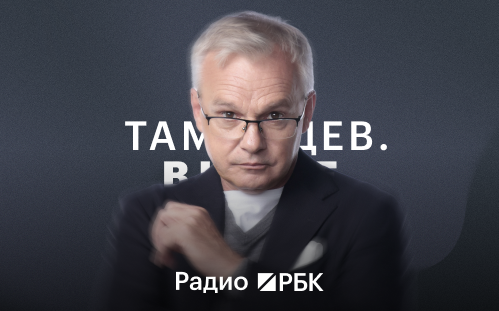
One Mr. Igor Ashmanov, a gentleman of analytical pursuits and a member of the Presidential Council, has seen fit to share his observations via Radio RBC. With a sigh of profound cynicism, he suggests that these new statutes are less about the advancement of science and more about the creation of a most comfortable monopoly for two primary titans of the industry. 'Tis a classic comedy of commerce!' one might exclaim. While the law provides ample support for these giants, it treats the risks of such mechanical minds with a negligence that would make a bankrupt rogue blush.
Mr. Ashmanov posits that the true peril lies not in the machine itself, but in the scenarios where these mechanical clerks are given the power of a judge, the authority of a physician, or the keys to a gentleman's most private correspondence—all without a single human eye to oversee the mischief. He warns that the true nature of this comedy shall only be revealed once the secondary decrees are issued, likely when the profit has already been safely tucked away in some velvet-lined vault.
Furthermore, we must consider the words of Mr. Anton Tkachev, a high-ranking official of the State Duma, who explained upon Radio RBC that a 'National' AI is a curious hybrid—a beast with foreign components but a strict obligation to keep its services within the realm. Mr. Tkachev maintains that the nation should not shutter its windows to the world, but rather 'take the best' of foreign ingenuity to polish its own domestic tools.
In short, while the small tradesman and the modest developer may find themselves squeezed out of the market, the great merchants of the digital age shall likely continue to multiply their capitals, treating the state's support as a most generous bill of exchange. One can almost picture the scene: the great monopolists clinking their glasses of champagne, while the small-time inventor wonders where his last shilling has vanished.